| Stage | What to know | Planning use |
|---|---|---|
| Before you go | Checking the expected weather is an essential part of planning any trip, whether it lasts one day or several. | Decide go, change route or stay home before leaving the car park. |
| On the hill | Conditions range from calm blue-sky days to ferocious winds, heavy rain and blizzards. Wind can be a real show-stopper. | Pack for the worst the day could bring and set a point at which you will turn back. |
| Staying warm | Hypothermia is most common in winter but can affect people in any season. | Carry warm layers year-round, including summer. |
| In an emergency | Call 999 and ask for Police, then Mountain Rescue. | Know this sequence before you need it. |
The figures above come from Mountaineering Scotland’s weather guidance and the Mountain Rescue Committee of Scotland.
Core hill walking safety Scotland guidance is simple: check the mountain forecast, carry layers and navigation, and if you are in trouble call 999 and ask for Police, then Mountain Rescue.
Rights and responsibilities on the hill sit within Scotland outdoor access rights, covered on the outdoors hub. This guide works through a day in order: planning, packing, walking, getting lost, calling for help and coping with delay.
Planning the day
Mountaineering Scotland describes climbing and mountaineering as activities with a danger of personal injury or death. That is the reason planning comes first: most decisions that keep a walk safe are made before boots touch the path.
Check the forecast for the hill, not the town
Mountaineering Scotland says checking the expected weather is an essential part of planning a trip, and notes that forecasting services prepared specifically for mountain areas are available online. A valley forecast can understate what a summit will feel like, so the Met Office forecast for mountain areas is a sensible place to start. The guide to mountain weather forecast scotland services goes into where to look and how to read them.
Treat wind as a route decision
Mountaineering Scotland points out that wind in the mountains can be a real show-stopper and can affect a journey far more than rain, snow or temperature. If the forecast shows strong wind, choose a lower or more sheltered route rather than hoping it will ease. Exposed ridges are the places where wind matters most, so they are the first thing to drop from a plan.
Build a route and a turn-around time
- Pick a route that suits the weakest member of the party. The group moves at the pace of the person finding it hardest.
- Mark decision points on the map. Choose junctions or high points where you will pause and judge weather, energy and daylight.
- Set a turn-around time before you leave. Agree it in advance and keep to it even if the summit looks close, because deciding in the moment is when tired walkers push on.
- Leave your plan with someone. Give them your route, your expected return time and the point at which they should raise the alarm.
Packing for a change in conditions
Because conditions can swing from warm, calm days to heavy rain and blizzards, kit is chosen for the worst the day could produce, not the weather at the trailhead. The checklist below is built around the hazards Mountaineering Scotland names, and around being able to find your way and keep warm if a walk goes wrong.
Hill walking essentials checklist
- Navigation: a paper map of the area and a compass you know how to use, with a phone as a backup rather than the main tool.
- Warm and waterproof layers: hypothermia can affect people in any season, so a spare warm layer and a waterproof jacket belong in the pack even on a summer walk.
- Food and drink: enough for the planned day plus extra in case the walk takes longer than expected.
- Head torch: a delay that runs into dusk is much easier to handle with light, and spare batteries make it dependable.
- First aid and a survival bag or shelter: something to keep an injured or stationary person out of the wind while help is on its way.
- Charged phone: the means of making the emergency call, kept warm and dry.
Do not forget the weather you rarely think about
Mountaineering Scotland calls lightning the forgotten hazard in Scotland’s mountains, noting that strikes do happen. There is no item of kit that solves it, so the forecast and your route choice do the work: if thunder is expected, an exposed summit is the wrong objective for that day.
On the hill: staying in control
Safe walking is mostly a habit of checking: where you are, how the weather is changing and whether the plan still fits the party. The forecast you checked at breakfast is a prediction, so compare it with what you can see.
- Track your position at each decision point. Locating yourself on the map while you still know where you are makes it far easier to recover if visibility drops.
- Eat, drink and add layers early. Waiting until you are cold or tired makes poor decisions more likely and hypothermia a greater risk.
- Respond to deteriorating weather by changing the plan. Turning back at a decision point is a normal outcome, not a failure.
- Keep the group together. A walker who drifts out of sight in poor visibility becomes a second problem.
If you are lost on a hill in Scotland
If you realise you are lost, the most useful thing is to stop moving blindly and think. Wandering further usually increases the area in which you could be, and tired, cold walkers make mistakes. Work through these steps in order.
- Stop and stay calm. Check the group is together and nobody is injured.
- Put on warm layers and eat something. Hypothermia is a risk in any season, so protect against it first.
- Check the map and compass against your surroundings. Look for features you can identify, such as a stream, a path junction or a distinct slope.
- Go back to the last place you were sure of. Retracing your steps to a known point is usually safer than pushing on into unknown ground, provided the way back is safe.
- Do not descend into steep or unfamiliar ground to save time. If you cannot establish where you are, or someone is hurt, stop trying to solve it yourselves.
- Find shelter from the wind and call for help. Use the emergency procedure in the next section.
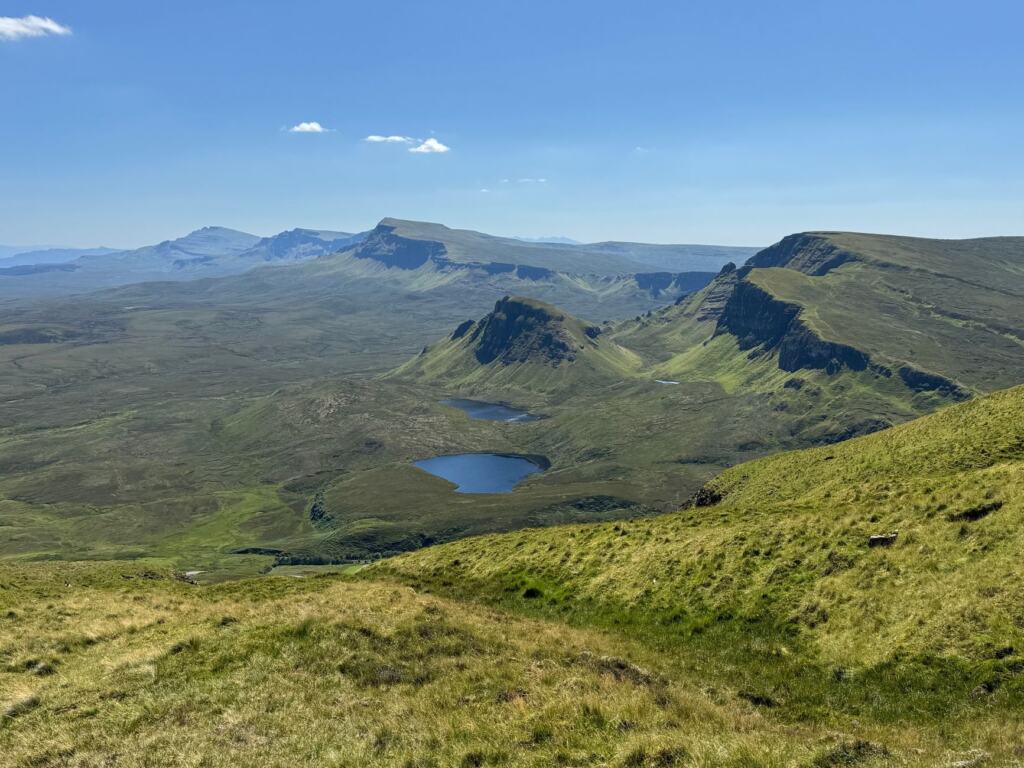
How to call mountain rescue in Scotland
The Mountain Rescue Committee of Scotland gives the procedure plainly: in an emergency call 999 and ask for Police, then Mountain Rescue. You do not dial a separate mountain rescue number. The call goes through the Police, who then arrange the response.
- Dial 999.
- Ask for Police.
- Then ask for Mountain Rescue.
- Describe where you are and what has happened. Give your last known position, the number of people, any injuries and what you are wearing and carrying for warmth.
- Follow instructions and stay where you are. Keep the phone on, keep the group sheltered and warm, and wait for the team to reach you.
Make the call early. A group that is lost, cold or carrying an injured person gains nothing by waiting until the situation gets worse, and an early call gives rescuers more time to reach you.
Delays, dusk and darkness
A walk that runs late is a common way for a manageable day to become an emergency. Setting a turn-around time before the walk, and keeping to it, is the main protection. If you are still on the hill as light fades, put on your head torch and warm layers before it gets dark, not after.
Deliberately spending a night out is a separate planning task with its own rules and kit, covered under wild camping scotland rules. Nobody should end up outdoors overnight by accident. If a delay looks likely to leave you unable to get down safely, make the call to 999 rather than gambling on a descent in the dark.
Frequently asked questions
What should I do if lost on a hill in Scotland?
Stop, put on warm layers, check your map and compass and, if you know a safe way back to your last certain point, retrace your steps. If you cannot work out where you are, or someone is injured, shelter from the wind and call 999.
How do I call mountain rescue in Scotland?
Call 999 and ask for Police, then Mountain Rescue, as the Mountain Rescue Committee of Scotland advises. Say where you are and what has happened.
What should be in my hill walking kit?
Carry a paper map and compass, warm and waterproof layers, food and drink, a head torch, first aid, a shelter and a charged phone. Pack layers even in summer, because hypothermia can affect people in any season.
How do I plan a safe route and turn-around time?
Check a mountain-specific forecast, pick a route to suit the weakest walker, and avoid exposed ground if wind is forecast. Agree your turn-around time before leaving and keep to it.
Is lightning really a risk in Scotland’s mountains?
Yes. Mountaineering Scotland describes it as the forgotten hazard in Scotland’s mountains, and strikes do happen. Avoid exposed summits when thunder is forecast.