In this best walking socks for wet conditions review, synthetic blends win on quick drying, merino wool on moisture management, and cotton comes last. Waterproof socks suit sustained rain, with fibre choice deciding comfort once feet are soaked.
The pairing of sock and boot matters as much as the fibre. Other kit comparisons sit in the walking gear reviews hub.
Wet-feet sock options side by side
The table compares the main sock types by what they do once water is already in the boot. It is a decision aid, not a lab ranking, so treat the notes as direction rather than measured scores.
| Sock type | Fibre composition | Behaviour when wet | Planning use |
|---|---|---|---|
| Synthetic blend | Polyester or nylon blends | Quick drying and durable | Best pick when socks must dry fast between soakings |
| Merino wool | Wool | Strong moisture management, temperature regulation, odour resistance | Best for long days where warmth and freshness matter |
| Alpaca (Murray sock) | Alpaca fibre, crafted in England | Described as naturally moisture-wicking | A wool alternative for walkers who like a soft natural fibre |
| Cotton | Cotton | Tends to hold moisture | Leave at home for longer or wet walks |
| Waterproof sock | Membrane such as GORE-TEX or eVent | Blocks water while sweat vapour escapes; a 5,000mm rating suits moderate rainfall | Suits sustained rain and wet ground rather than already soaked feet |
Figures and fibre notes come from a waterproof hiking sock guide and a walking sock guide from a sock maker.
Fibre choices for wet feet
Fibre decides how a sock behaves after water has got in, so it is the first thing to settle. Which walking socks cope best when feet get wet? Wool-based and synthetic socks do, and cotton does not.
Synthetic blends
Synthetic blends such as polyester or nylon are described by the sock maker’s walking guide as offering durability and quick drying. Another guide says synthetic blends are often preferred for quick-drying properties in wet conditions. They suit walkers who expect repeated soakings, such as stream crossings or showery days, and want socks that recover fast.
Merino wool socks
Merino is praised for softness, odour resistance and temperature regulation, and wool-based socks are noted for excelling at moisture management. That combination makes merino the better choice for long, cool days where staying comfortable matters more than the quickest possible dry. It also copes better with a day of wear without smelling.
Alpaca
The Murray sock is crafted in England from alpaca fibre, and alpaca is described as naturally moisture-wicking. It is a niche option, but a reasonable alternative for anyone who finds wool itchy and still wants a natural fibre that handles damp.
Cotton
Cotton is soft but tends to hold moisture, which the maker’s guide calls less ideal for longer walks. For wet feet it is the weakest fibre of the group. If cotton socks are the only pair to hand, keep them for short, dry outings.
Drying speed and what it means on the trail
How fast do wool and synthetic socks dry? Synthetic blends are the fibre repeatedly described as quick drying, while wool-based socks are valued for managing moisture rather than for speed. Treat that as a trade-off: pick synthetic when the priority is a sock that recovers quickly, and wool when the priority is comfort while damp.
On a multi-stage walk, a spare pair lets one sock dry while the other is worn. Hang the damp pair from a rucksack strap or on a line when stopped, because airflow does the work no fibre can do alone.
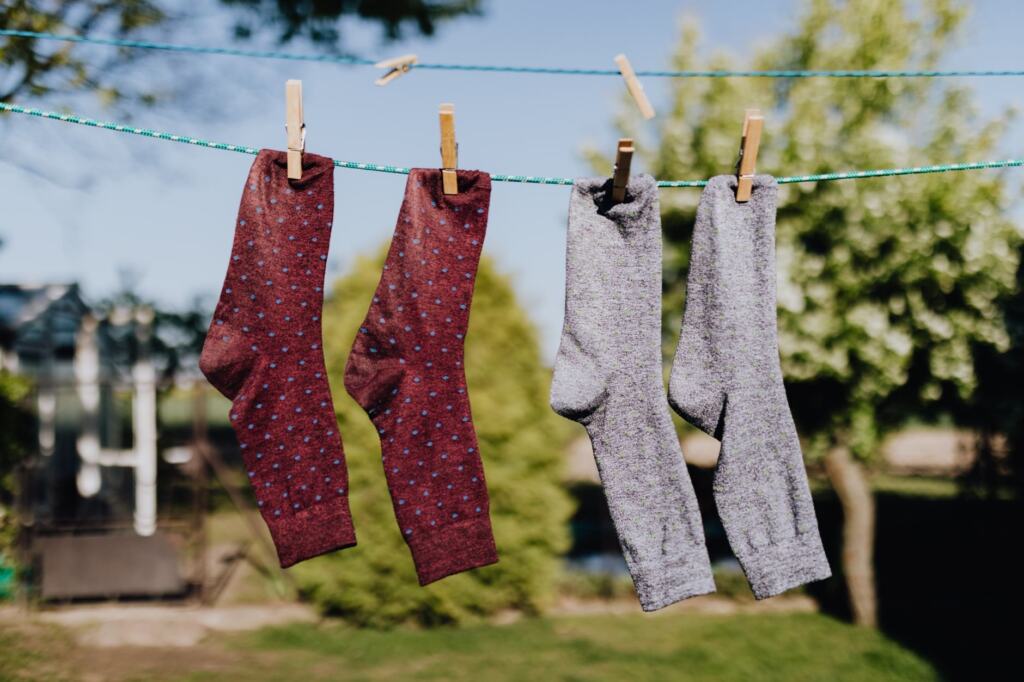
Wet kit on a coastal route is also a bag problem, which the guide to rucksack rain cover vs dry bag liner covers, since a dry spare pair is worth little if the pack is soaked.
How to prevent blisters when your feet are wet
Blisters follow friction, so the aim is a sock that moves moisture away and does not bunch or rub. The sock maker describes its walking sock as engineered to reduce friction and minimise the risk of blisters, and advises looking for seamless toes or flatlock seams, which reduce friction points.
- Choose the right fibre. Wool-based and synthetic socks manage moisture better than cotton, which tends to hold it.
- Check the seams. Seamless toes or flatlock seams remove ridges that rub on wet skin.
- Match cushioning to the boot. Light cushioning suits warm weather or snug-fitting shoes, so a snug walking boot may leave no room for a thicker sock.
- Carry a spare pair. Swapping into dry socks at a rest stop gives skin a break from prolonged dampness.
If a hot spot starts, stop and deal with it early rather than walking on. For wounds or blisters that become painful or infected, follow NHS or first aid guidance.
Sock liners for walking
A sock liner is a thin extra sock worn under the main walking sock. It adds a layer between skin and the outer sock, which can be useful for walkers who find their normal sock uncomfortable against the foot. A liner changes how much room the boot has, so try the combination on a short walk before relying on it for a long wet day.
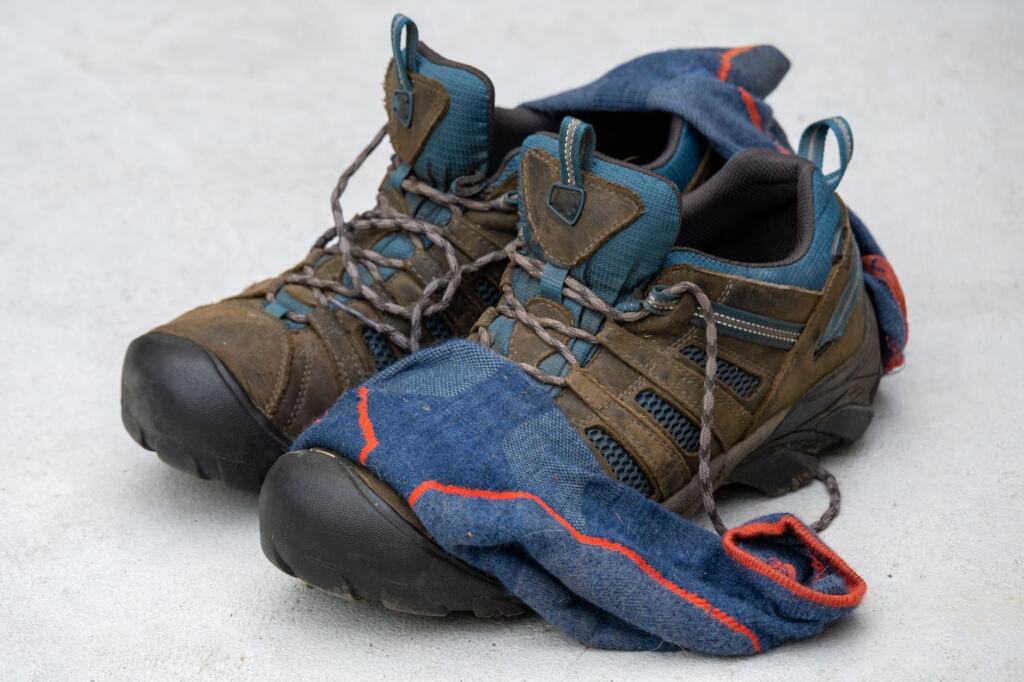
Keep the same rule for both layers: avoid cotton, which tends to hold moisture, and choose a synthetic or wool-based liner so the inner layer does not undo the work of the outer sock.
Do waterproof socks work?
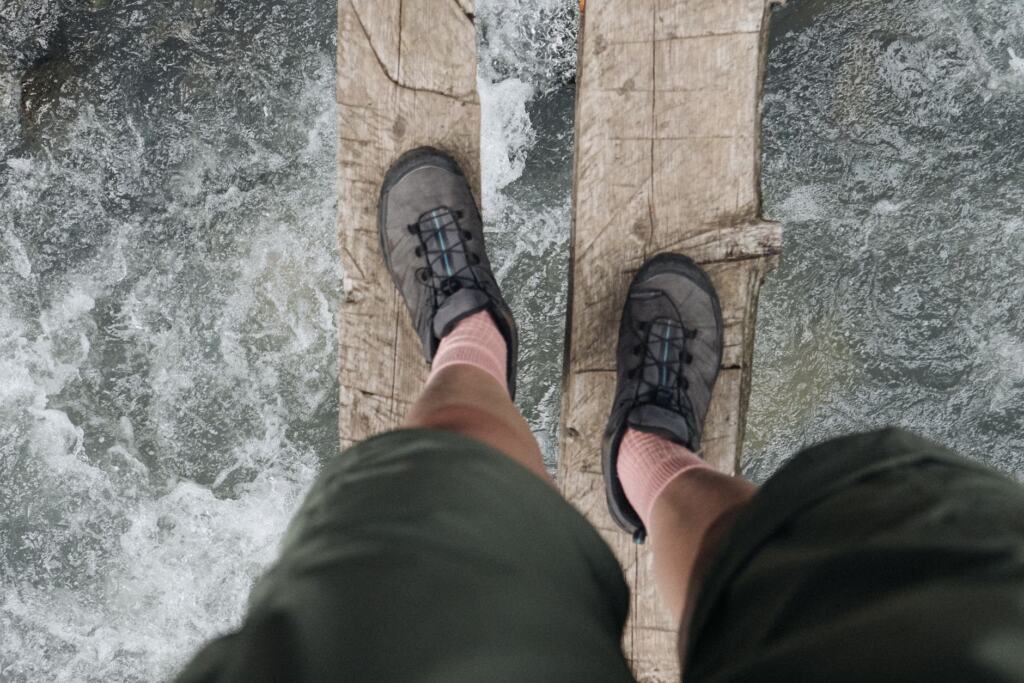
Yes, within limits. Waterproof socks use a specialised membrane that prevents water seeping through while allowing sweat vapour to escape, and GORE-TEX and eVent are named as providing superior waterproofing while maintaining breathability, according to the waterproof sock guide. The same guide says they can reduce friction and blister risk.
Ratings run from 0 to 10,000mm or more, and a 5,000mm rating is described as able to withstand moderate rainfall and wet conditions. That makes the rating the number to check before buying for a wet-weather walk.
The judgement call is about timing. A membrane sock is built to keep water out, so it suits long spells of rain or wet ground. If water has already soaked the boot another way, the fibre in a normal sock will matter more to how the foot copes.
Which sock suits which walk
- Showery day walks: a synthetic blend, because quick drying matters more than long-term warmth.
- Long or cold days: merino, for temperature regulation and odour resistance.
- Persistent rain or boggy ground: a membrane sock with a suitable waterproof rating, over a thin sock.
- Sensitive skin: alpaca or a soft merino with flatlock seams.
- Short dry outings only: cotton is acceptable, nothing wetter.
Hands and heads get cold on exposed ground too, as the windproof gloves for walking review explains.
Frequently asked questions
Is cotton ever acceptable for walking socks?
Cotton is soft but tends to hold moisture, so it is less ideal for longer walks. It is only a sensible choice for short, dry outings.
What does a waterproof rating in millimetres tell you?
It indicates how much water pressure a sock membrane can withstand. The scale typically runs from 0 to 10,000mm or more, and 5,000mm is described as enough for moderate rainfall.
Are waterproof socks breathable?
Membranes such as GORE-TEX and eVent are described as keeping water out while letting sweat vapour escape, so breathability is part of the design.
Is alpaca a good alternative to merino?
Alpaca is described as naturally moisture-wicking, so it can suit walkers who prefer it to wool. Merino has more supporting detail for temperature regulation and odour resistance.