Quick answer: For woodland walks in Fife, choose Kemback Wood for a steep, waterfall-and-bluebell wood near St Andrews, the coastal wood near Balmerino for bluebells, or Devilla Forest for an easy 10.8 km route.
Fife’s woods range from steep, burn-cut slopes to flatter forest and pinewood. The right pick depends on your legs, the season and how much climbing you want. For a wider choice of walking routes in Fife, start at the main route hub. New to walking? The guide to beginner walks in fife is a gentler place to begin.
Choosing between Fife’s woods
Three questions narrow the choice: how steep a walk you want, whether you are chasing a particular flower, and whether you want a route to follow for several hours or a short wander. Fife’s woods fall into two broad types. Steep, burn-carved slopes reward you with water and flowers but ask more of your footing. Larger forests and pinewoods suit easier, longer walking.
- Want bluebells and waterfalls: Kemback Wood near St Andrews, where a burn comes down past waterfalls among the bluebells.
- Want a coastal route with a woodland detour: the wood near Balmerino, reached by steps up from the Fife Coastal Path.
- Want an easy, longer outing: Devilla Forest near Kincardine, listed as an easy 10.8 km route.
- Want trees with a sandier setting: the pinewoods of Tentsmuir National Nature Reserve, which sit alongside dunes.
| Wood | Setting | What it offers | Planning use |
|---|---|---|---|
| Kemback Wood | Steep woodland quite near St Andrews | A burn tumbling from waterfalls through bluebells | Best for walkers happy with slopes who want water and spring flowers together |
| Wood near Balmerino | Steep slopes above the Fife Coastal Path | A wood full of bluebells, several burns and footbridges | Suits a coastal walk with a steps-and-bridges woodland section |
| Devilla Forest, Kincardine | Forest route | Easy grade, 10.8 km | Suits a longer, less demanding day; allow time for the full distance |
| Tentsmuir National Nature Reserve | Dunes and pinewoods | Walking among pines beside dunes | Suits walkers who want forest and open ground in one outing |
Details come from a Fife walking blog for Kemback and Balmerino and from Hiiker’s Fife route map for Devilla Forest and Tentsmuir.
Dens and glens: the landform behind Fife’s wooded valleys
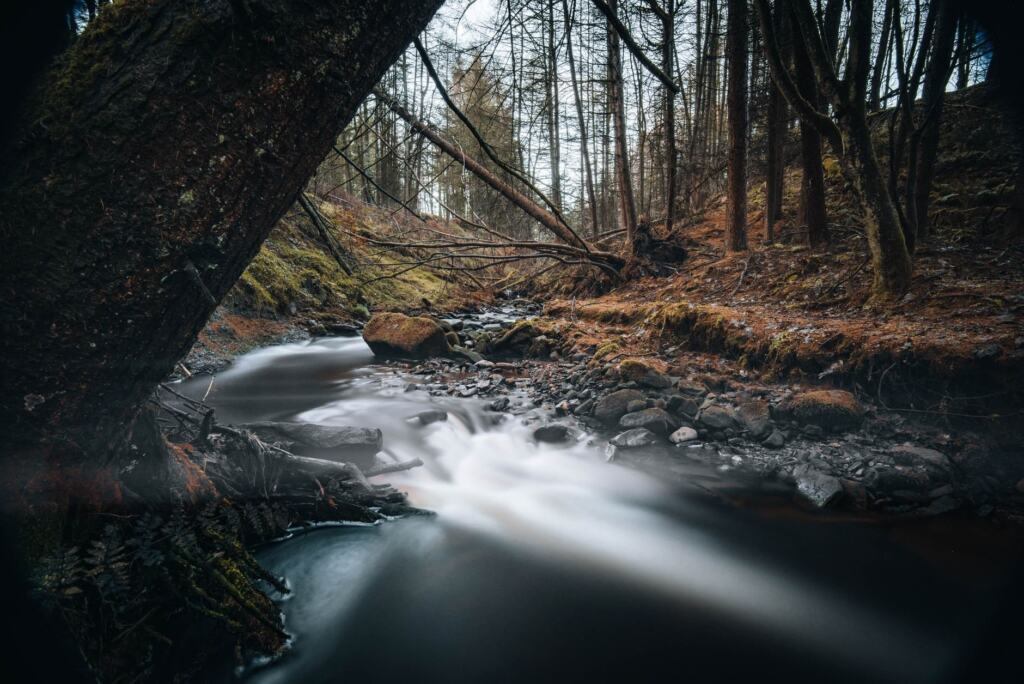
A den or glen, in the sense walkers meet it in Fife, is a steep-sided wooded hollow with a burn running along the bottom. The descriptions of Kemback and Balmerino show the pattern clearly: woodland on steep slopes, water running down through it and paths that have to cross that water. If a route promises a den or glen, expect gradients and stream crossings as part of the walk.
That shape also explains the appeal. Water, shade and sheltered slopes give a very different feel from open farmland, and the flowers, ferns and trees cluster along the burn. The cost is that the walking is rarely flat.
Kemback Wood near St Andrews
One walker’s account describes Kemback Wood as a steep woodland quite near St Andrews, with a burn that tumbles down the hill from a set of waterfalls amongst bluebells. That makes it a strong first choice if the aim is a compact, scenic den walk with water in view for much of the way. Because the wood is steep, it suits walkers who are comfortable on slopes more than those wanting a level stroll.
The steep slopes near Balmerino
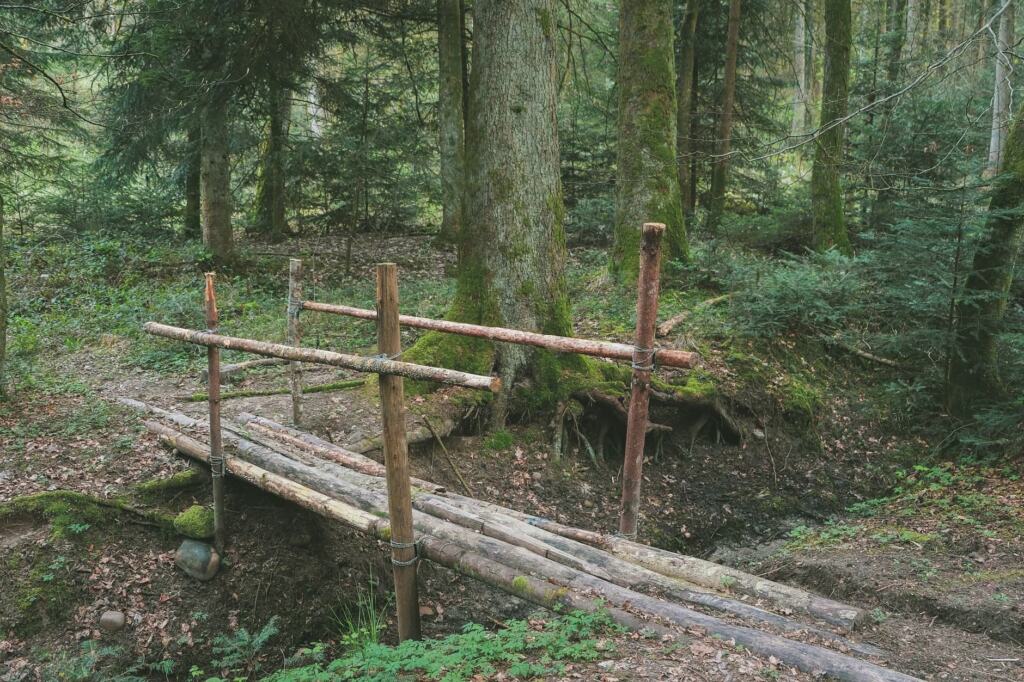
Near Balmerino, the same account describes several burns flowing down steep slopes, with footbridges crossing them. This is the practical face of a den: the path is shaped by the water, so crossings are part of the route rather than an obstacle to avoid. Footbridges keep the crossings straightforward, but slopes on either side still call for steady, unhurried walking.
Bluebell woods and spring flowers
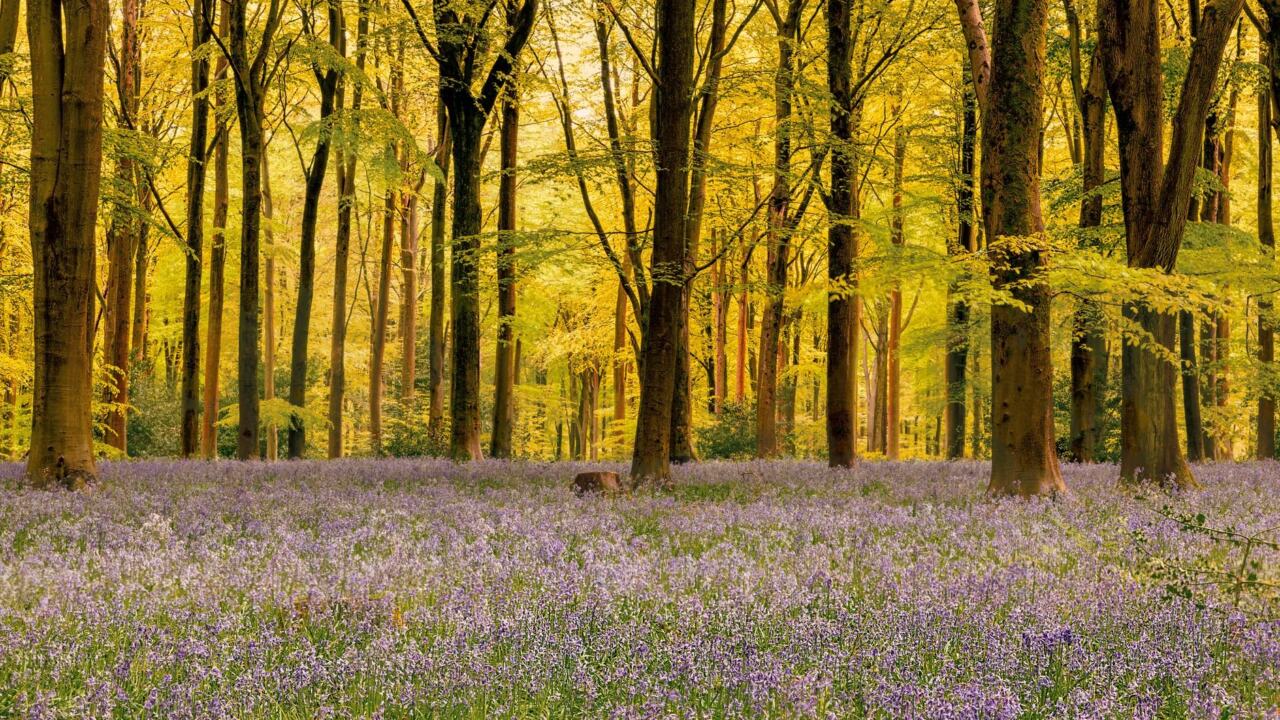
Fife’s best-described bluebell woods are the steep ones. At Kemback the bluebells grow along the burn below the waterfalls. Near Balmerino, the same walker climbed steps from the Fife Coastal Path into a wood full of bluebells. For anyone searching for Fife bluebell walks, those two woods are the supported starting points.
Bluebells are a spring flower, so plan these woods for spring rather than the rest of the year, and look at recent local reports before travelling because flowering varies from season to season. Wild garlic is another spring woodland flower to look for on woodland floors, and it can share the walk with bluebells.
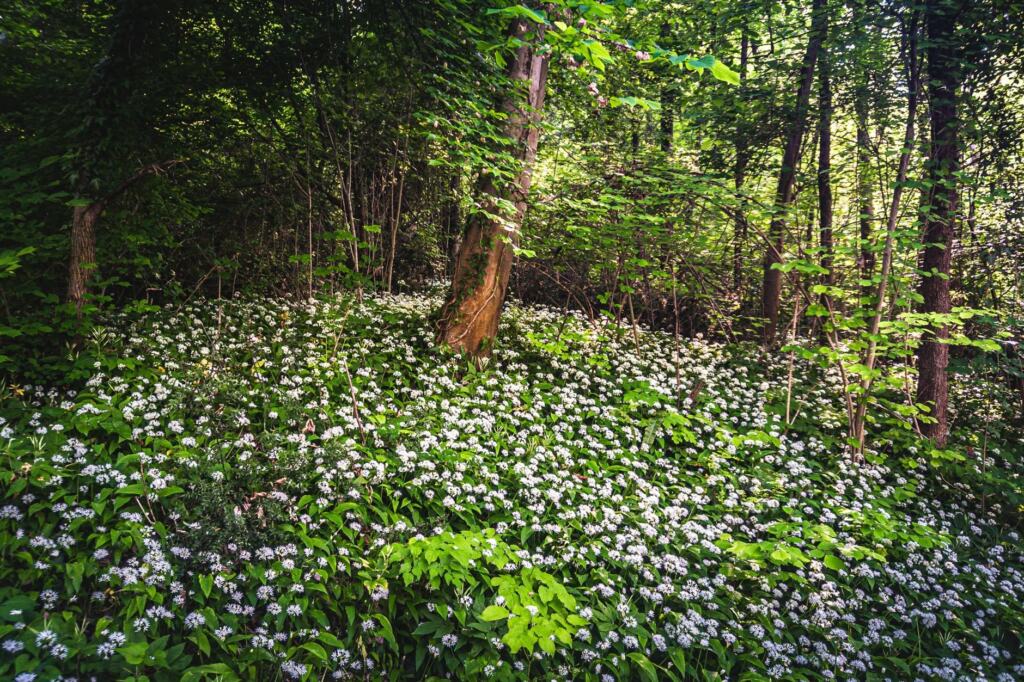
A practical point for flower walks: stay on the path. Bluebell carpets are easily damaged by trampling, and the steep banks at Kemback and Balmerino are exactly where a step off the path is both harmful to the flowers and awkward to recover from.
Forests and pinewoods for longer, easier days
If the steep dens sound like too much, the larger forests offer a calmer alternative. Devilla Forest near Kincardine is listed as an easy route of 10.8 km. That is a full outing for most walkers, so treat the easy grade as a statement about difficulty rather than length, and allow a generous part of the day.
The same map points to the dunes and pinewoods of Tentsmuir National Nature Reserve. Pinewood walking keeps trees overhead while the dunes keep the horizon open, which is a useful mix when a purely enclosed wood feels heavy.
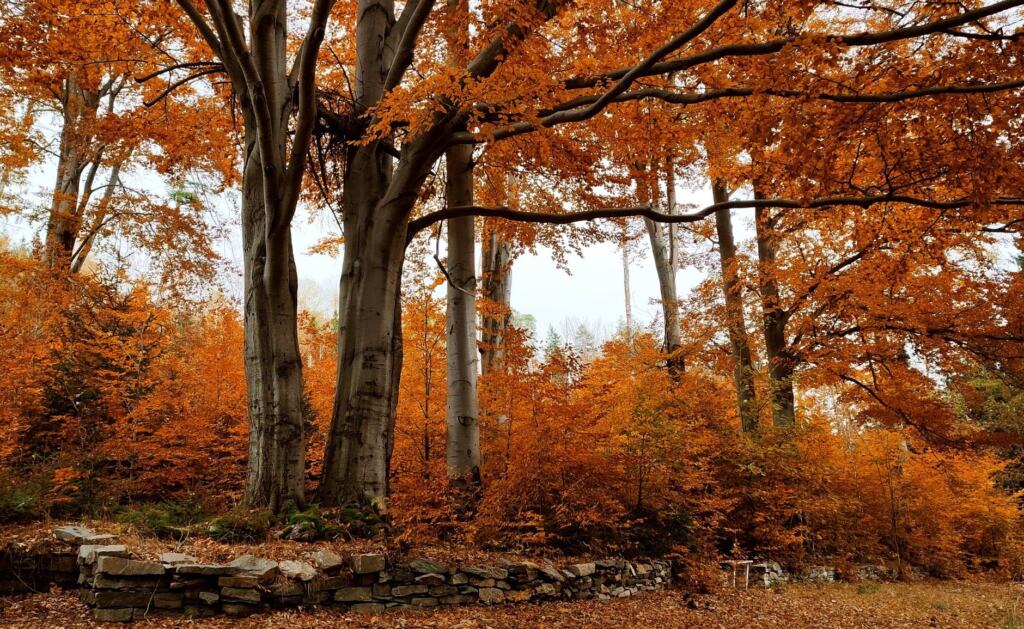
Autumn is the season for beech. Beech is common in Fife but is not native, according to the walking account of Kemback and Balmerino, so its stands are worth seeking out for autumn colour on any woodland track where it grows.
Paths, footwear and finding the entrance
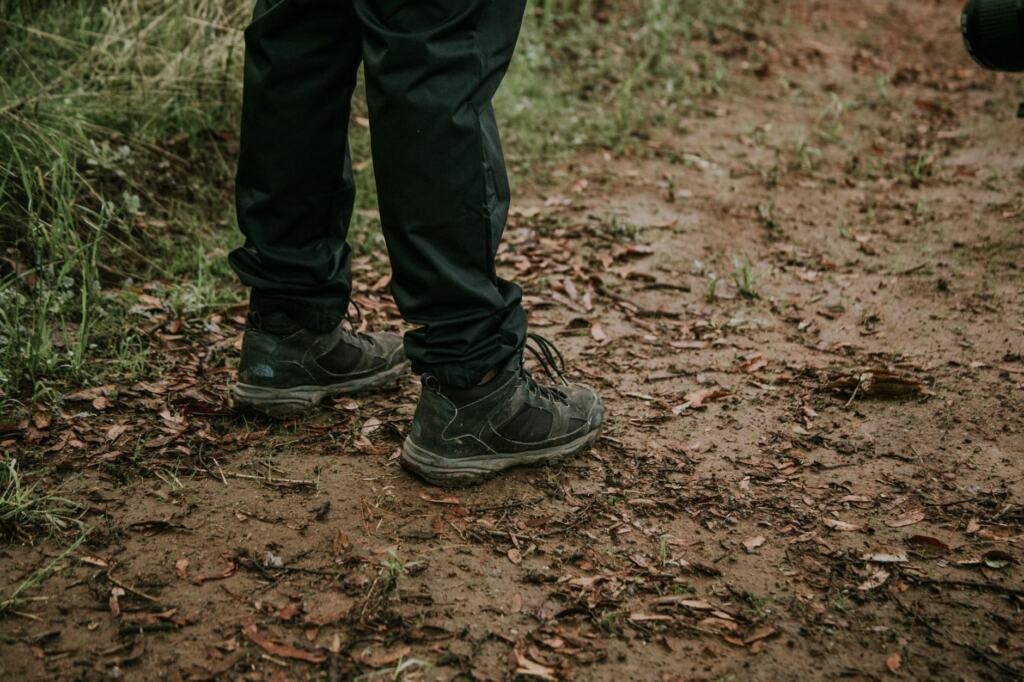
Steep slopes, steps and burn crossings point to one decision: wear footwear with a firm grip. Walking boots are the sensible choice for dens and glens, where the ground beside a burn can be damp and the slopes leave little room for a slip. Trainers can cope with an easy forest track, but they are a poor fit for the steep woods.
Access is often simpler than it looks. At Balmerino, the wood is reached by steps up from the Fife Coastal Path, so a walker already on the coast can add a woodland loop without a separate journey. Many walkers split the Fife Coastal Path into sections over eight days, according to The Outdoor Guide, which gives plenty of chances to pair a coastal section with a wood. For shoreline days without the trees, see the guide to beach walks in fife.
Troubleshooting a woodland walk
- The slopes are harder than expected: turn back at a footbridge rather than push on. The burn crossings in the dens are natural stopping points, and Devilla Forest’s easy grade is the better fallback for another day.
- The bluebells are not out: switch to a forest or pinewood walk. Devilla Forest and Tentsmuir do not rely on a flower season.
- The path is wet near a burn: slow down and use the footbridges where provided instead of stepping across open water.
- The entrance is hard to spot: on the coast, follow the Fife Coastal Path to the steps that lead up into the Balmerino wood.
Frequently asked questions
Is Devilla Forest a good choice for an easy walk?
Yes. Devilla Forest near Kincardine is listed as an easy route, but the listing gives 10.8 km, so it suits walkers happy with distance more than those wanting something short.
Is beech a native tree in Fife?
No. Beech is common in Fife but it is not native, which makes its autumn colour a feature of planted and established woods rather than ancient native woodland.
Can woodland walks be combined with the Fife Coastal Path?
Yes. The wood near Balmerino is reached by steps up from the coastal path, and many walkers split the full path into sections over eight days, leaving room for detours like this.
Which Fife woods have waterfalls?
Kemback Wood near St Andrews has a burn that tumbles down the hill from a set of waterfalls amongst bluebells, making it the clearest choice for water and flowers together.