Walking dogs Scotland access rules can be settled at a field gate: if young animals or nesting birds may be ahead, use a lead. Otherwise keep the dog under close control.
These dog rules sit within Scotland outdoor access rights, and the wider freedoms they depend on are covered in the guide to right to roam scotland. Access rights come with a responsibility to keep a dog from causing harm.
- Baseline: keep the dog under close control, meaning it responds to commands and stays close at heel.
- Breeding season: the Cairngorms National Park Authority’s summary of the code advises close control or a short lead, usually April to July.
- Fields with livestock: use a lead if in doubt, and keep dogs out of fields containing young animals.
- Law: a dog that attacks or worries livestock on agricultural land commits an offence.
Lead or no lead: what the code asks
The question “do dogs have to be on a lead in Scotland?” has a more nuanced answer than a flat yes. The code advice summarised by the Cairngorms National Park Authority is that during the breeding season (usually April to July) owners should keep a dog under close control or on a short lead. That applies in moorland, forests, grassland, and on loch and sea shores.
The wording is an either/or. A lead is not the only way to meet it, but it is the sensible choice for a dog that does not reliably respond to you. The same summary adds a simple fallback: if in doubt, put the dog on a lead until you are in an area where you are sure it can cause no harm. That advice is aimed at places with vulnerable wildlife or young farm animals.
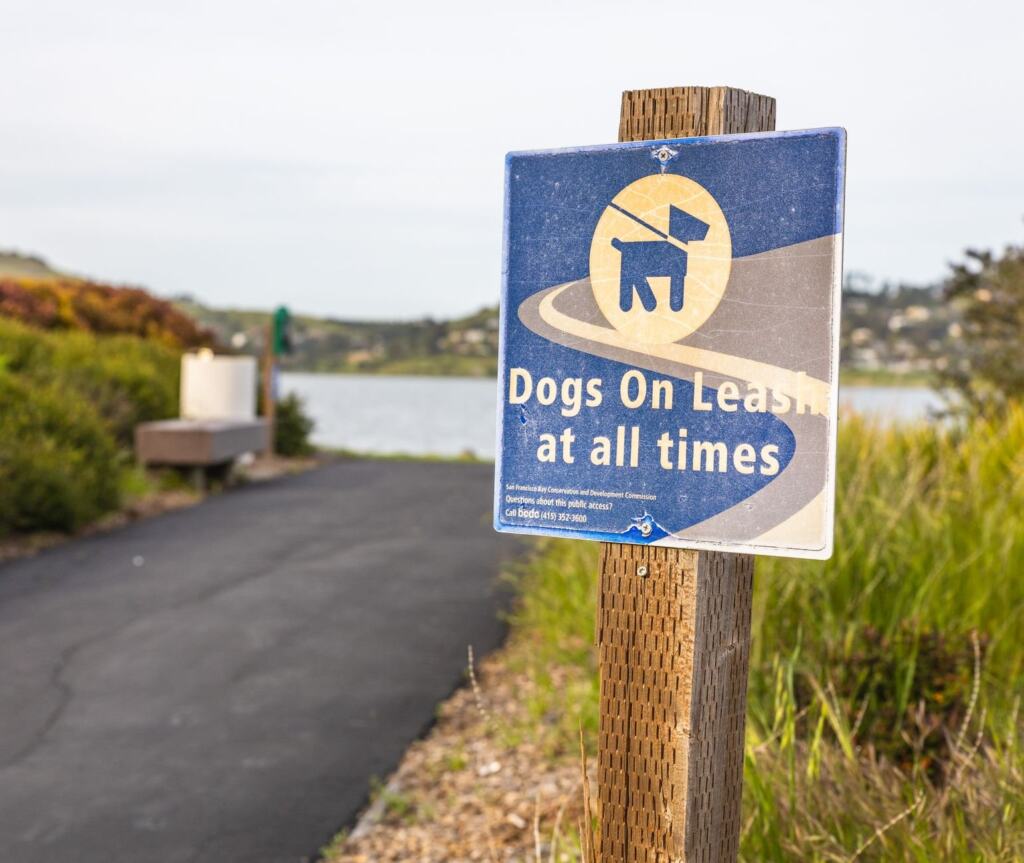
So the lead is advised wherever control or the surroundings are uncertain. Where a landowner or site posts a sign asking for dogs on leads, following it is the straightforward course.
What close control means in practice
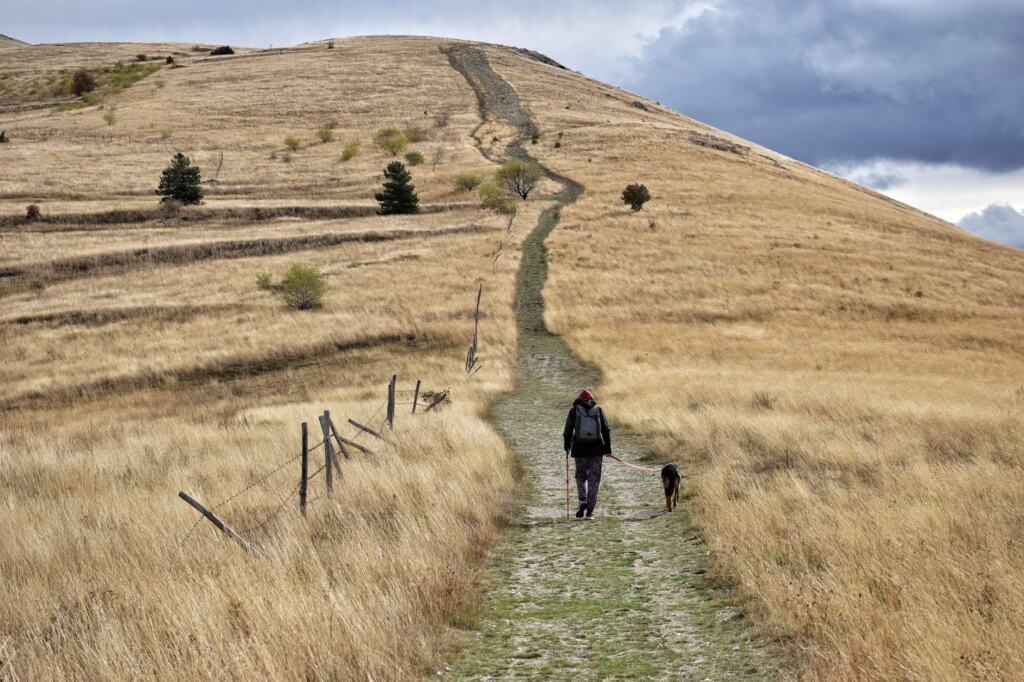
Searches often phrase this as “under proper control”. The wording in the code summary is close control, and the Cairngorms National Park Authority explains it as a dog that responds to your commands and is kept close at heel. Both parts matter, so a dog that comes back eventually but ranges widely does not meet it.
- Responds to commands: the test is what the dog does when called away from something interesting, not on a quiet path.
- Stays close at heel: distance matters because a dog out of reach cannot be stopped before it reaches a sheep field or a nest.
- Fallback: a dog that fails either test is better on a lead for that stretch, particularly in the settings covered below.
Quick decision table
This table turns the code wording and the livestock offence into a choice you can make on the path.
| Situation | What the code or law points to | Planning use |
|---|---|---|
| Open country, no livestock or nesting habitat nearby | Close control: responds to commands, kept close at heel | A lead is optional. Use one if the dog’s recall is not dependable. |
| Moorland, forest, grassland, loch or sea shore in the breeding season, usually April to July | Close control or a short lead | Choose the lead if the dog ranges ahead or flushes wildlife. |
| Field containing young animals | Dogs should be kept out | Plan another route instead of crossing. |
| Field with livestock and you are unsure | Lead until you are sure the dog can cause no harm | Clip on before the gate, not after the animals notice the dog. |
| Agricultural land with livestock | Offence if a dog attacks or worries livestock | Penalties are covered in the law section below. |
The table draws on the Cairngorms National Park Authority’s code summary and on section 1 of the 2021 Act.
Ground nesting birds and the breeding season
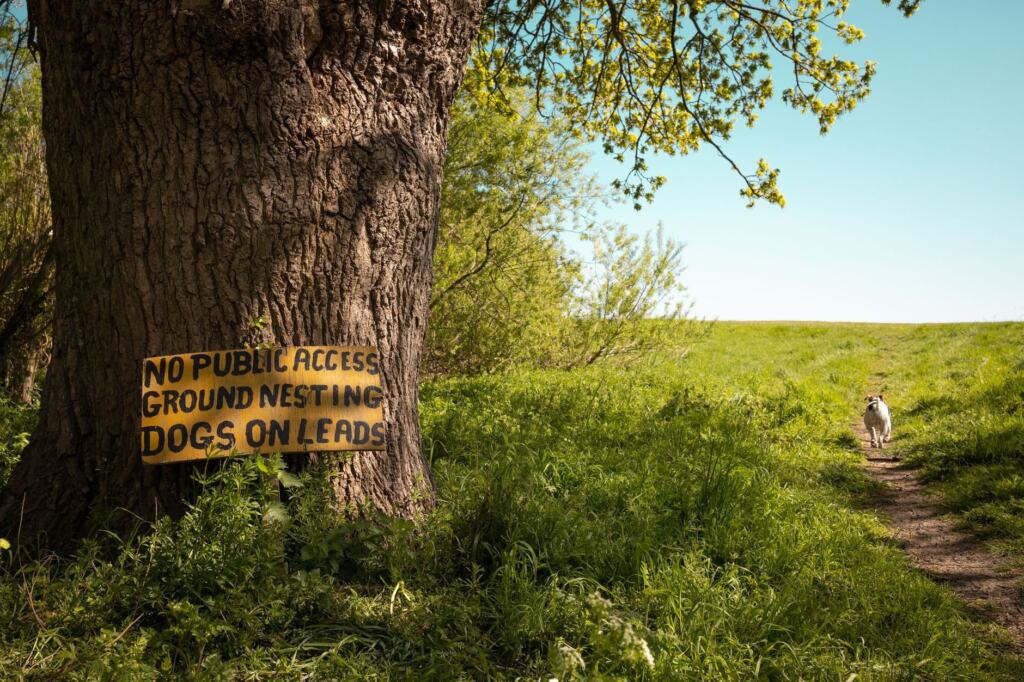
Dogs affect ground nesting birds mainly by disturbance. The Cairngorms National Park Authority warns that on the plateau, ground nesting birds can be scared off their nests by dogs. The young can then die of cold or become prey. The dog does not need to touch a bird to cause the harm. Leaving the nest is enough.
The breeding season is usually April to July, so that is the period to be most cautious. The habitats the code summary lists include moorland, grassland, forests, and loch and sea shores. Coastal paths in Fife therefore fall within the advice, even though nests are rarely visible from the path.
Because nests are hard to spot, the practical approach is to keep the dog close or on a short lead through open, rough ground in these months and stay on the path. Do not wait to see a bird before reacting.
Fields with sheep, lambs and cattle
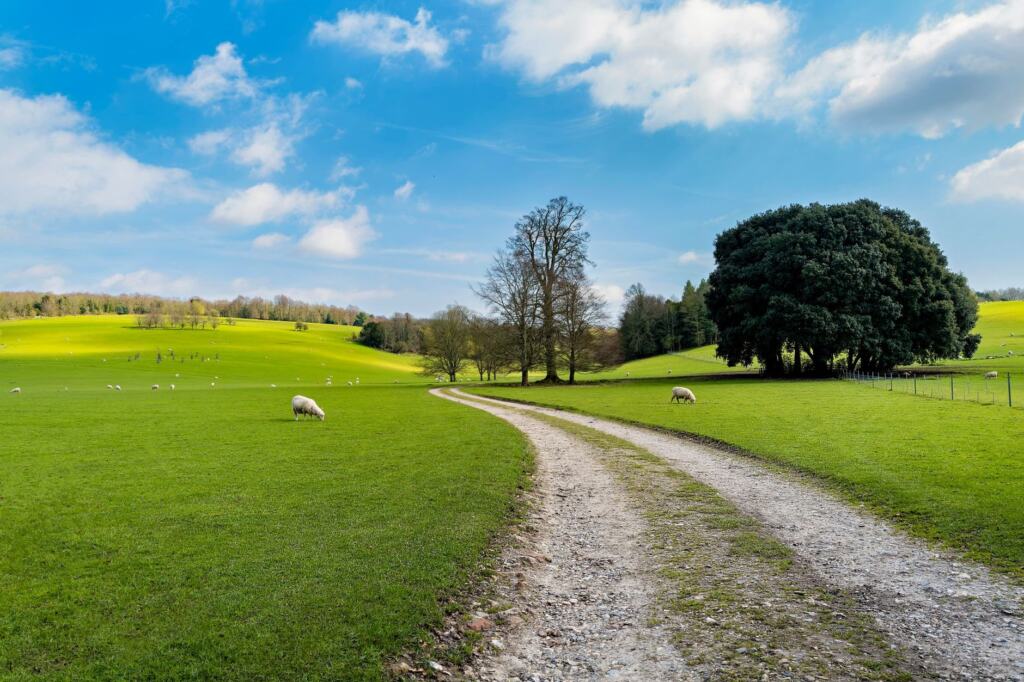
Whether you can walk a dog through a field with livestock depends on the animals, their age and your control of the dog. The code advice does not ban dogs from every field, but it sets firm limits where young animals are present.
Sheep and lambs
The Cairngorms National Park Authority states that sheep and lambs can be injured and killed by attacks from uncontrolled dogs, and that dogs should be kept out of fields containing young animals. A lead does not make crossing such a field acceptable. If you meet a field like that, choose a different route. If you are in doubt about what is in a field, keep the dog on a lead until you are sure it can cause no harm.
Farmers report the problem as common. NFU Scotland cites a 2018 survey with more than 340 responses, in which 72 per cent of respondents had an issue with livestock worrying on their land. The same page says 84 per cent of responses felt the access code did not give sufficient protection. These are farming-union survey results rather than official statistics, but they show why landowners treat unleashed dogs near stock seriously.
Cattle
Cattle call for a different response. The code summary notes that cattle can be unpredictable around dogs and can react very aggressively. If cattle react like that, it advises letting the dog off the lead and taking the shortest route out of the field. Holding on to a lead can put you between the animals and the dog.
Route planning around farm stock more broadly is covered in the guide to walking through fields with cattle scotland.
Livestock worrying law and penalties
The law on dogs and sheep centres on the Dogs (Protection of Livestock) Act 1953. Section 1 of the 2021 Act amends that 1953 Act in Scotland and retitles the offence as a dog attacking or worrying livestock on agricultural land. Worrying is not limited to a bite. The offence covers harassment of stock, so a dog that chases sheep can be caught by it even if no animal is hurt.
The same section sets the maximum penalty at up to 12 months’ imprisonment, a fine not exceeding £40,000, or both. These are ceilings for the most serious cases, not typical outcomes.
The code and the Act work at different ends of the problem. The code tells walkers how to avoid trouble through control, leads and route choice. The Act sets the consequences when control fails on agricultural land with livestock.
Frequently asked questions
| Question | Answer |
|---|---|
| Does the code apply on mountains? | Yes. The Cairngorms National Park Authority says it also applies in mountain areas where ground nesting birds such as ptarmigan and dotterel can be found. |
| Do I have to pick up dog faeces? | The same summary says to always pick up your dog’s faeces if you are walking in a well-used area. It extends that to places where farming interests are at risk. |
| Who do I call if a dog is attacking livestock? | According to NFU Scotland, call 999 if you witness a dog attacking livestock, because it is an emergency and a crime. Call 101 if the attack has ended. |
| Do the higher livestock penalties apply to older incidents? | No. Section 1 of the 2021 Act applies the increased penalty only to offences committed on or after the date the modification comes into force. |