The best walking poles for long days are lightweight carbon fibre. Choose aluminium if you want poles that bend rather than splinter, or folding poles for the smallest packed size.
This guide sits within our walking gear reviews. It compares three Montem options on weight, material, locking, length and price, then explains how to set pole length and use poles on steep ground. Poles pair well with sound footwear, so see our best walking socks. If you also want dry legs on rough ground, our best walking gaiters guide covers that.
What separates one pair of poles from another
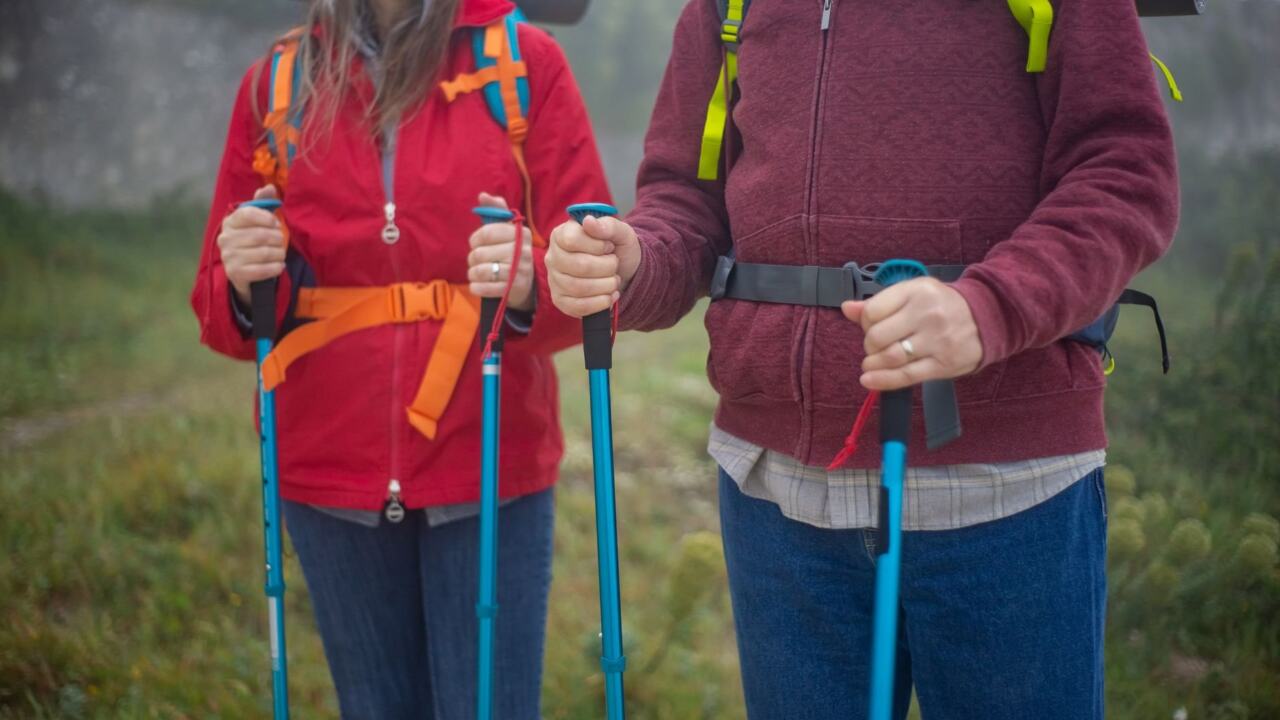
Walking poles and trekking poles are the same adjustable, sectioned tools. Trekking poles are identified by their two or three interlocking sections. Five choices decide which pair suits you.
- Weight: a lighter pole is less tiring to swing over a long day, but lightness usually costs more.
- Material: carbon fibre and aluminium behave differently under stress, covered below.
- Locking mechanism: this decides how quickly and securely you can change length on the move.
- Length range: a wide range lets one pair serve tall and short walkers, and flat and steep ground.
- Packed size: this matters if the poles live on or inside a daypack for part of the walk.
The options below are not ranked from a head-to-head test. They run from lightest to most compact, and each suits a different job.
Poles worth considering
Montem Ultra Light carbon fibre poles
These are the lightest of the options here. Montem lists its carbon fibre poles at 7.6 oz per pole, and the Ultra Light 100% carbon model is priced at USD 89.95 at the time of writing.
They suit walkers covering long distances, or anyone who finds heavier poles tiring by the end of the day. The trade-off is durability. Under high stress, carbon fibre poles are more vulnerable to breakage or splintering than aluminium, so they suit steady hill paths better than rough scrambling where a pole might be wedged between rocks.
Montem Ultra Strong aluminium poles
This is the robust choice. Montem builds the Ultra Strong poles from aluminum 7075 with a telescoping system. The aluminium version weighs 9.2 oz per pole, and the Ultra Strong model lists at USD 74.95.
They suit walkers who put real load through their poles, or who are hard on gear. Under high stress aluminium can bend but is unlikely to break, which is a more forgiving failure than splintering. They are also the cheapest of the three options here. Extra weight per pole is the cost.
Montem Ultra Z folding poles
The Ultra Z is a folding design, listed at USD 85.99. It is the pick if you want poles that disappear into a daypack when the path flattens or a stile needs both hands.
Foldable Z-style poles achieve the smallest packed size, down to 14 to 16 inches. They suit scramblers, travellers and anyone who regularly stows poles. A telescoping pole is the simpler design, with a larger packed size.
Side-by-side comparison
| Pole | Material and format | Weight per pole | Listed price (USD) | Planning use |
|---|---|---|---|---|
| Ultra Light | 100% carbon fibre | 7.6 oz | 89.95 | Long days where low weight matters most |
| Ultra Strong | Aluminum 7075, telescoping | 9.2 oz | 74.95 | Hard use and the lowest price of the three |
| Ultra Z | Folding | Not listed | 85.99 | Poles that are stowed often |
Weights, materials and prices are as listed on Montem’s trekking pole page when fetched on 2026-10-27. Prices change, so check the current listing before you buy.
Carbon fibre or aluminium
Carbon fibre wins on weight and aluminium wins on toughness. Carbon fibre poles average 13 to 18 oz per pair and cost more. Aluminium poles usually weigh 18 to 22 oz per pair. An ultralight carbon pair can be targeted at 10 to 15 oz (280 to 425 g) per pair, which is the range to look for if you want the best lightweight trekking poles.
Choose carbon if your priority is carrying less weight over many hours. Choose aluminium if you expect knocks, tight rock gaps or heavy use, or if budget matters more than the last few ounces.
Locks, straps and grips
The locking mechanism sets how quickly you can change length. An external lever lock is quick and easy to adjust, even when wearing gloves, which makes it the practical choice for cold, wet hills. A twist lock uses an expander and screw setup that is consistently strong and durable.
Montem’s own height adjustment uses a clasp, with quarter-turn screw adjustments to set the tension you want. If a lock slips, adjust the screw gently rather than forcing it. Its poles also come with nylon wrist straps.

Setting pole length for the terrain
Set your poles so your arms sit at about a 90 degree angle while you use them. Montem advises this when adjusting arm angle to 90 degrees. Montem’s poles lengthen from 24 in to 53 in, and most trekking poles adjust from about 24 to 55 inches.
- Stand on level ground with the poles planted beside you and the tips on the ground.
- Adjust each pole until your elbow is bent at the 90 degree angle.
- Close the locks and give each pole a firm push to check it holds.
- Fit your hand through the wrist strap from below, then grip the handle.
That level-ground length is a starting point. Typically you shorten the poles going uphill and lengthen them going downhill, so stop to adjust when the slope changes for more than a short pitch.
Using poles on steep descents
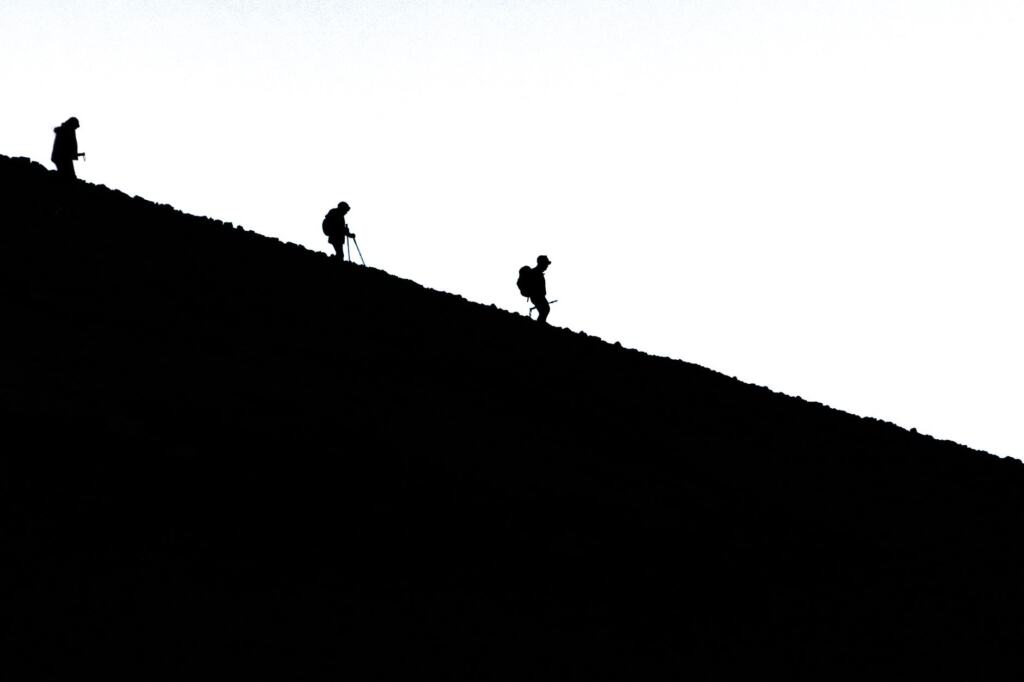
Poles do help on descents. They reduce strain on your knees and joints by distributing some of the weight and impact across your upper body.
On a steep or slippery slope, lengthen the poles first, plant them ahead of you and step down with your weight moving onto the poles. The longer setting lets you reach down the slope without leaning forward.
Carrying poles on a daypack
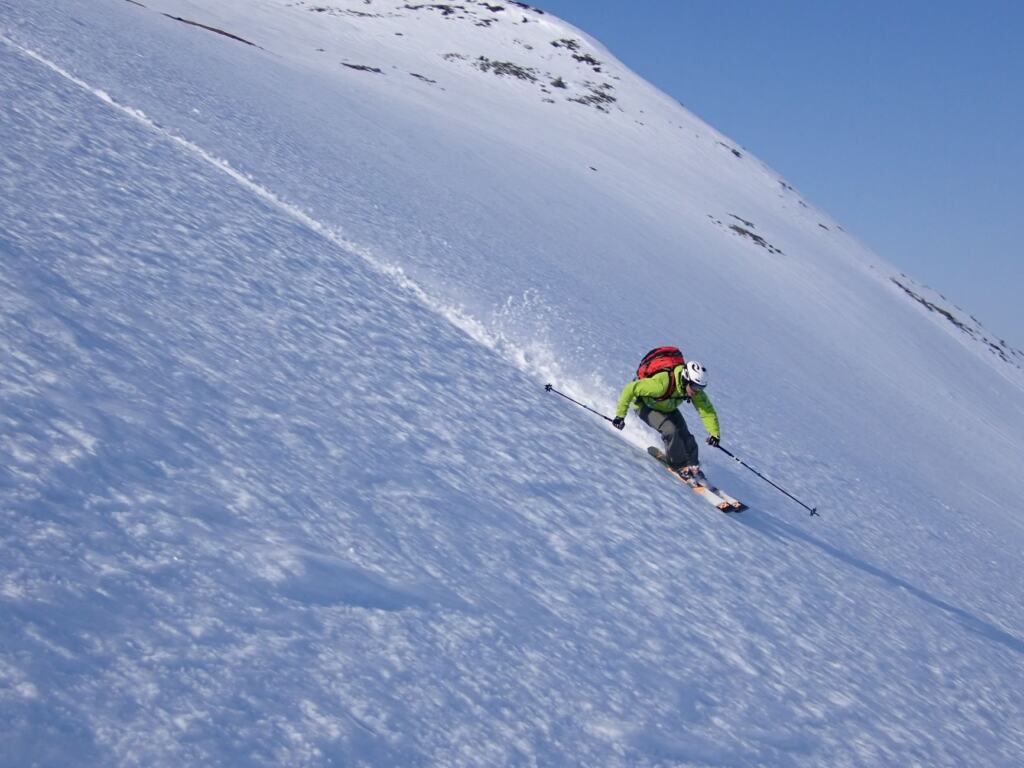
You can pack poles in your backpack or attach them to the outside using straps. Packed length decides which is easier. Telescoping poles have a larger packed size, typically 24 to 27 inches, so they often ride on the outside of a daypack. Folding poles are short enough to go inside.
Frequently asked questions
Do I need shock absorption in my poles?
It depends on your joints. Shock absorption is recommended if you have weak or damaged ankles, knees or hips, according to Trekking Pole Reviews. Walkers without joint problems can choose on weight, material and locking instead.
How much weight can walking poles take?
Montem states its poles have a tested support of over 350 lb per set. That is a manufacturer rating, not a target to aim for.
How do I adjust the wrist strap?
On Montem’s poles, pull the tension block out to adjust the strap length, then set it so the strap supports your hand comfortably.
Are walking poles and trekking poles different?
For practical purposes they are the same product. This guide uses both terms for adjustable poles built from two or three interlocking sections.