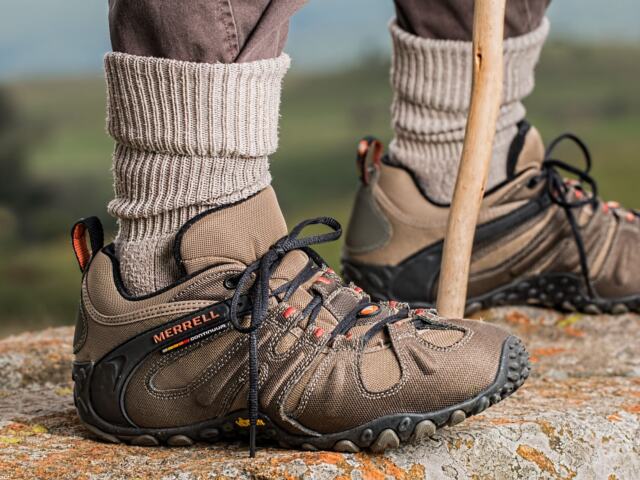
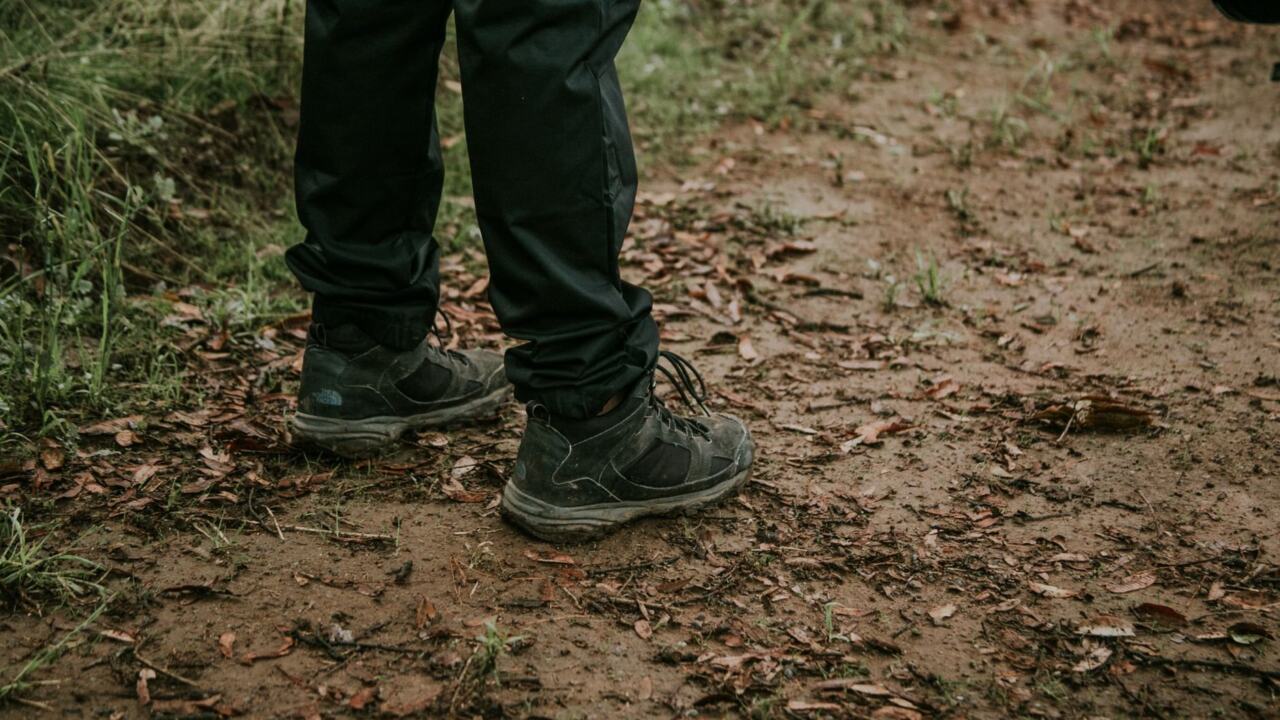
| Fit question | What to look for | Planning use |
|---|---|---|
| Foot shape | The distance from big toe to little toe is wider than the heel | Judge width at the toes, not by heel comfort or length alone |
| Boot shape | Many shoes taper towards the toe end | Be cautious with narrow or pointed fronts when buying online |
| Toe end | A slightly rounded end is best | Favour rounded over square or sharply tapered fronts |
| Payoff | A wide toe box can reduce the risk of foot pain and deformities | Treat toe room as a priority, not a luxury |
These points follow Advnture’s guide to wide toe boxes, where the reviewer calls toe box width a make-or-break factor for hiking boots.
The best walking boots for wide feet are the ones with a roomy, slightly rounded toe box that actually fits your foot, not simply the ones labelled wide. Check toe shape first, then confirm arch and heel hold.
Brand labels vary, so shape matters more than the word on the box. More kit comparisons are collected in walking gear reviews.
Before you buy: measuring width and arch
Walking boots are footwear built to be worn for hours on uneven ground, so a fit problem that is minor in a shop becomes serious on a long route. Spend a few minutes at home learning your own foot shape before comparing models.
Measuring width at the toes
A toe box is the part of a shoe that surrounds the toes. Because the distance from your big toe to your little toe is wider than your heel, the front of a boot has to hold a much broader foot than the back. That is why heel fit and toe fit can disagree, and why a boot that grips the heel well can still squeeze the front of the foot.
Use whichever of these methods suits you:
- Trace the foot. Stand on paper in the socks you plan to walk in, with your weight on the foot, and draw around it. Mark the widest point across the toes.
- Use a foot-measuring device. Many outdoor shops have a Brannock-style gauge that reads width as well as length. Ask for both readings.
- Measure late in the day. Feet tend to feel fuller after time upright, so a late visit gives a more honest picture of how a boot will feel mid-walk.
Compare your tracing with the inside shape of a boot’s footbed once it is out of the box. If your toe outline spills past the edge of the insole, the boot is too narrow at the front, however good the length feels.
Reading your arch
Width and arch are separate questions. A high arch can leave a boot feeling loose over the instep while still pressing at the sides of the forefoot, and a low arch can make the same boot feel cramped along the inside edge. Note where your foot sits on the footbed outline and where the arch lifts away from it. That tells you whether you need extra volume, a firmer insole or simply a different last.
Anyone shopping for high arches and wide feet together should pay attention to lacing flexibility as well as toe space. Boots with eyelets that let you vary tension over the instep give you a way to hold the midfoot without clamping the toes.
In the shop: fitting boots for wide feet
Treat the shop as a testing session. Try boots from several makers, because a boot that is roomy in one brand’s range can feel narrow in another’s, even when both are labelled the same way. Take the socks you will actually wear, and keep your measurements to hand.
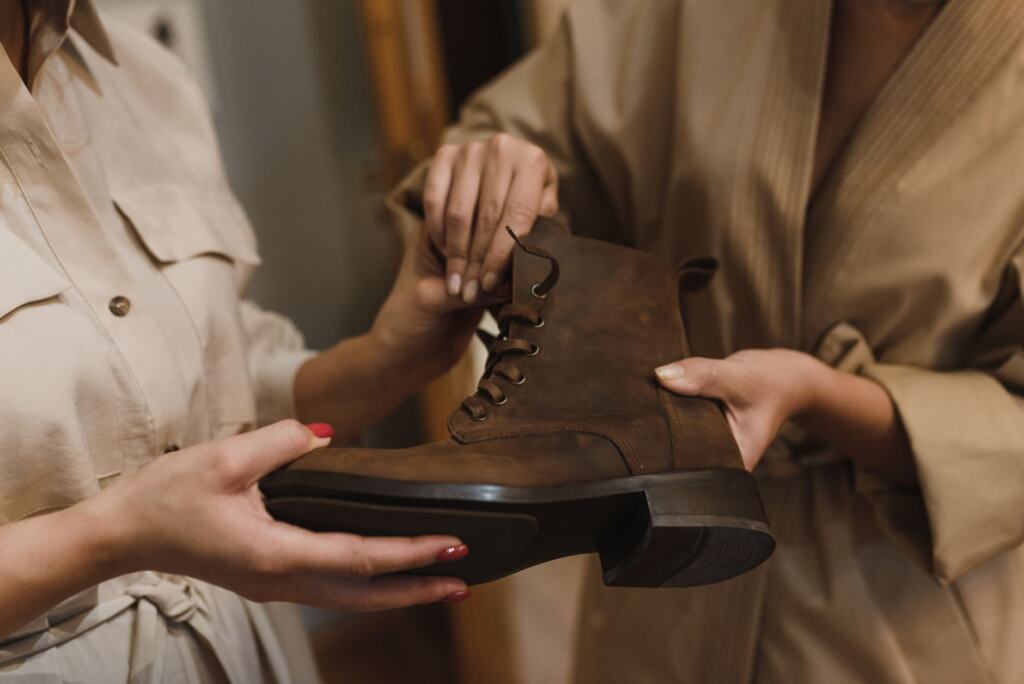
Judge the shape before trying it on
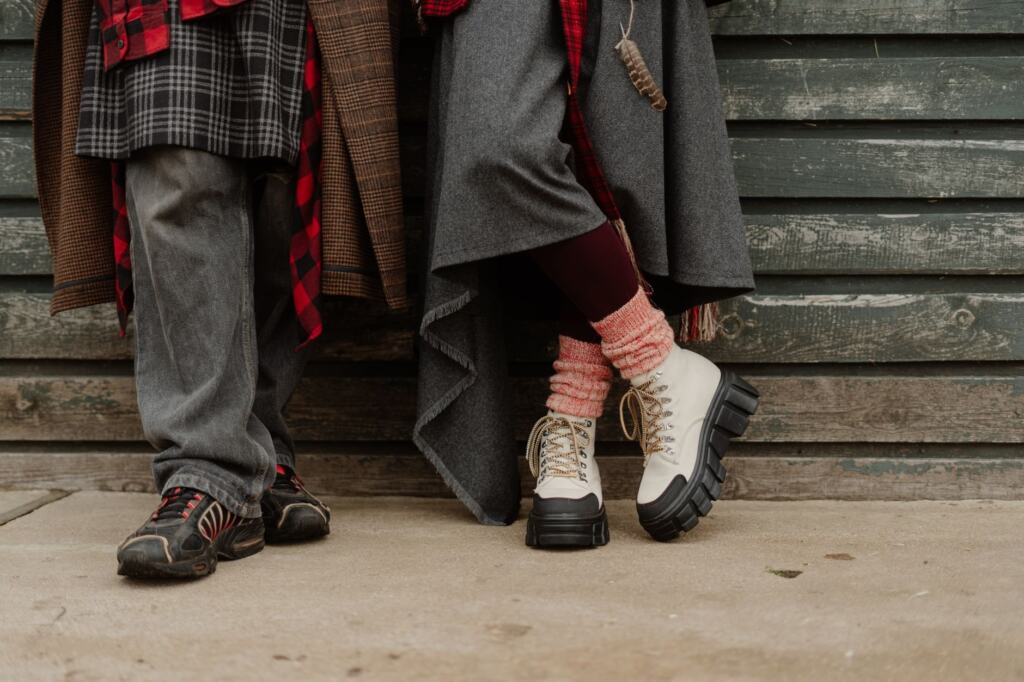
Look at the boot from above and from the front. Many shoes taper towards the toe end, and that taper is what squeezes the toes together. A slightly rounded toe end is the better shape for a broad forefoot. Square fronts are not automatically roomy, and sharply pointed ones rarely suit a wide foot.
Test the fit while wearing them
- Stand and flex. Stand on both feet, lace the boots as you would on the hill, and wiggle your toes. They should spread without pressing against the sides.
- Walk the shop floor. Pay attention to pressure at the little-toe joint and the big-toe joint, the two spots where a narrow boot bites first.
- Use a slope if there is one. Many shops have an incline board. Walking down it shows whether the toes slide forward against the front of the boot.
- Press the toe box. With the boot on, press the upper over the toes. You should feel material that gives, not your toes pushing straight against a stiff edge.
- Wear them for a while. Keep them on as you browse. Hot spots and pinching often appear after several minutes rather than at first lacing.
A wide toe box can reduce the risk of foot pain and deformities, which is a good reason to be strict at this stage. If a boot only fits when you hope the leather will stretch, choose another.
Men’s and women’s ranges
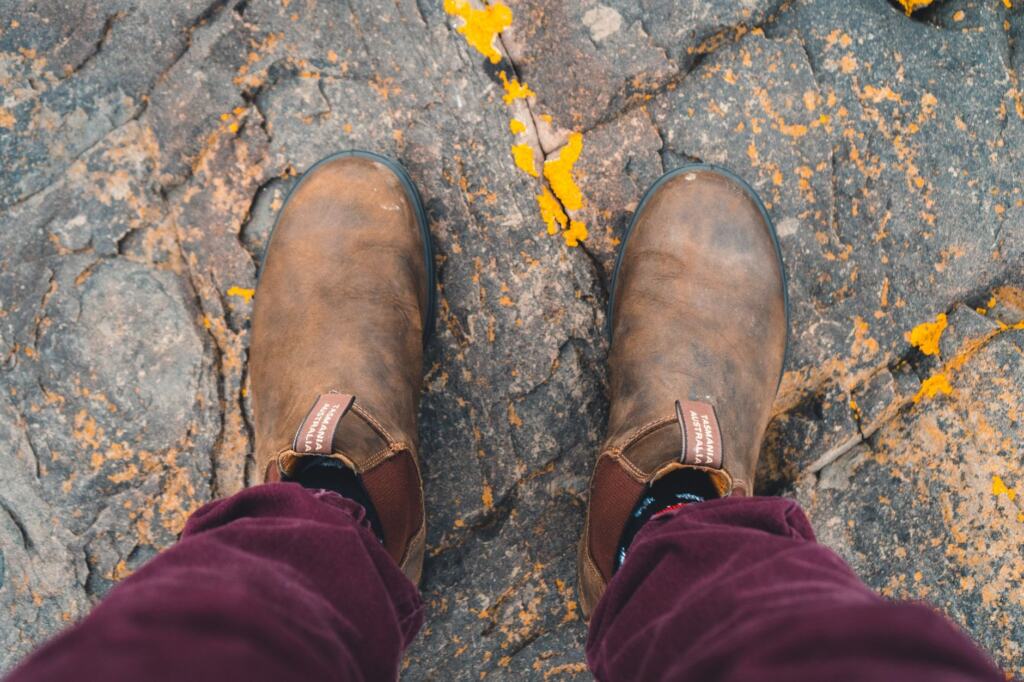
Anyone looking for wide-fit walking boots for men faces the same shape questions: a rounded toe end, no taper pressing on the toes, and enough room across the forefoot. Women’s lasts are cut differently, so those shopping in that range can find the sibling guide to the best walking boots for women useful alongside the checks here.
First walks: breaking in and lacing
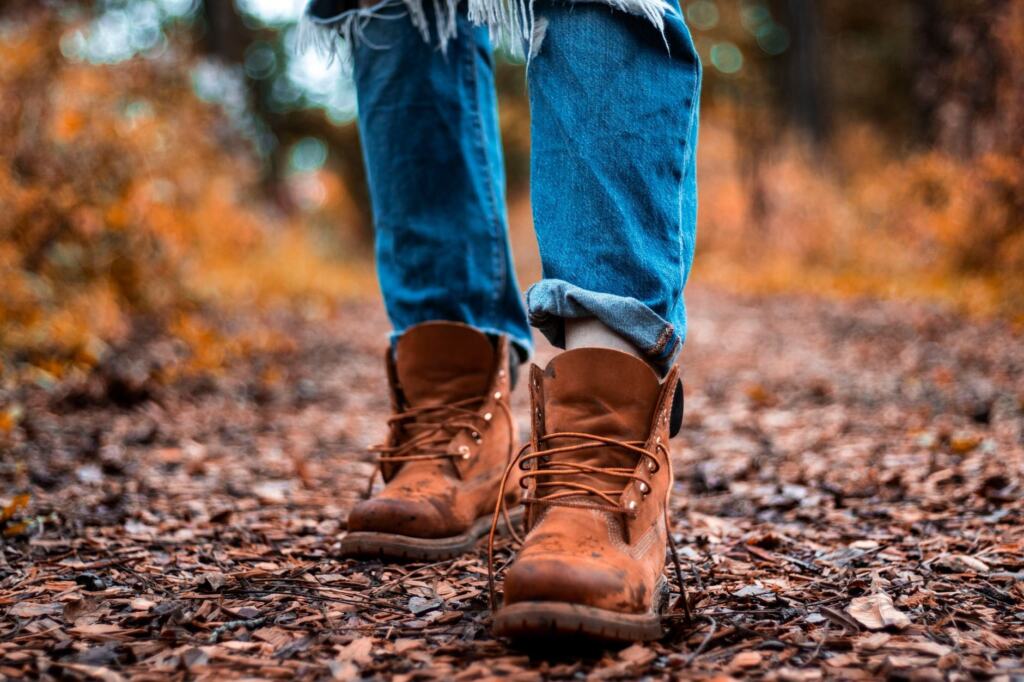
Start with short outings on easy ground before a full day. This lets you spot hot spots while you can still return the boots, and lets the footbed and upper settle to your foot.
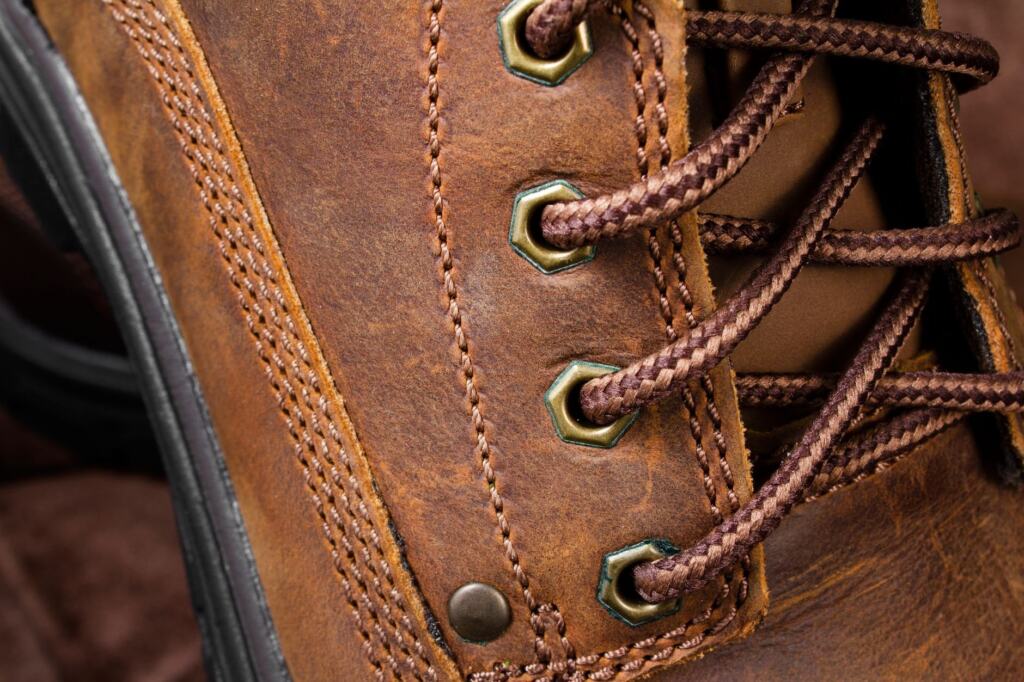
Lacing is the quickest adjustment available. Snug the laces over the instep and ankle to hold the heel, and leave the lower section looser so the forefoot can spread. If your arch is high, a lighter touch at the middle eyelets can relieve a pressure line across the top of the foot.
If the toes feel cramped after the first outing, the problem is probably the boot’s shape rather than the break-in. Leather and fabric may soften, but a toe box that is too narrow in the first place rarely turns into a roomy one.
Fine-tuning with socks and insoles
Socks and insoles change how much volume a boot has, so adjust them before deciding the boot is wrong. Bring the socks you will use for walks, and test the boots with them rather than with thin shop socks.
- Thicker socks. They take up room and can make a borderline boot feel tight across the toes. If a boot only just fits, try it with the sock you intend to wear before committing.
- Thinner socks. They free up space, but they can leave a boot with too much heel movement. Check that the heel stays put as well as the toes having room.
- Removable insoles. Lifting the factory insole out shows how closely the foot sits to the sides of the boot. A different insole can support a high arch or add or remove volume.
Keep adjustments small and change one thing at a time. Swapping socks, insole and lacing all at once makes it impossible to tell which change helped.
Matching boots to the walk
Terrain changes what you ask of a boot. Soft woodland tracks forgive more than rough ground, but the toe room principle holds throughout: a toe box that lets the toes spread is the feature the Advnture reviewer, who tests hiking and running shoes daily, treats as decisive for hiking footwear.
For longer days, try boots with the pack and layers you plan to carry, since a loaded day asks more of the fit than a browse around a shop. Carry blister care too: the guide to the best first aid kit for hiking covers what to put in the pack.
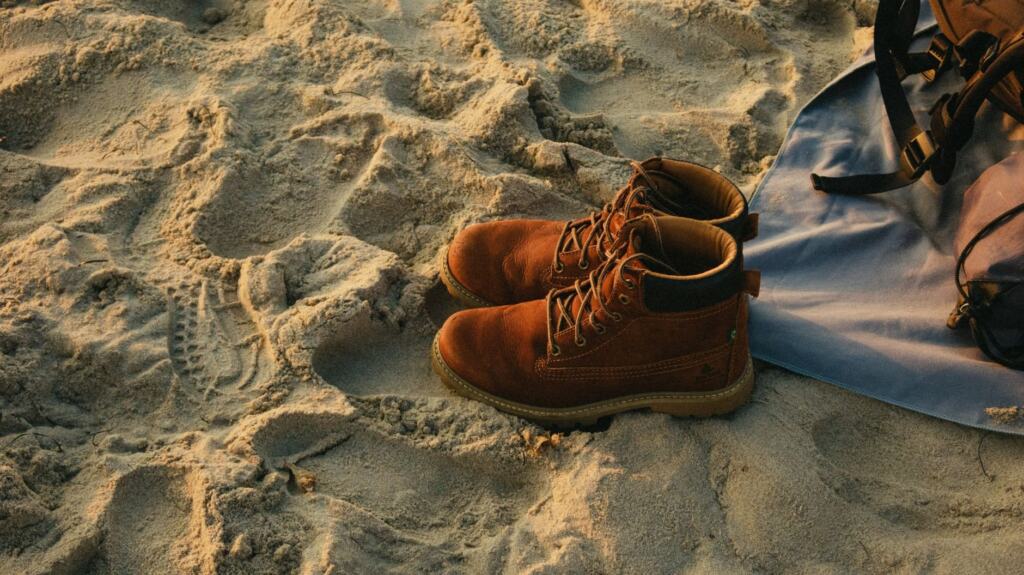
Troubleshooting fit problems
Most problems point to a specific cause. Use these pointers to decide whether to adjust, swap or return.
- Toes pressed against the sides. The boot is too narrow at the front. Try a rounder toe end or a different brand rather than a longer size, which usually adds length without adding width.
- Toes hitting the front downhill. The heel may be lifting or the lacing too loose over the instep. Re-lace, then retest on a slope.
- Pressure across the top of the foot. This often relates to a high arch or too much tension at the middle eyelets. Loosen the lacing there, or try a thinner insole.
- Heel slipping while the toes are comfortable. The boot may be roomy overall. Tighten the ankle lacing, try a thicker sock, or consider a model with a snugger heel cup.
- Soreness that appears only late in the day. This points to a shape problem that a short test misses, so keep the boots in a returnable condition and walk further before deciding.
If none of the adjustments help, move on rather than persevere. A well-shaped boot should feel acceptable within the first few outings, and ongoing pressure at the toes is a reason to change boots, not to endure them.
Frequently asked questions
How do I know if I need wide-fit walking boots?
You probably need them if boots that fit your heel and length squeeze the front of your foot. Toes spread wider than the heel, and many shoes taper towards the end, so a narrow toe box leaves little room. Pressure at the little-toe or big-toe joint is a common sign.
Is a wide label the same as a wide toe box?
No. A label describes a manufacturer’s sizing, while the toe box is the part of the boot surrounding your toes. Judge the actual shape: a slightly rounded end with room for the toes to spread is better than a tapered one, whatever the label says.
Does a wide toe box matter for comfort or just fit?
It matters for both. Advnture notes that a wide toe box can reduce the risk of foot pain and deformities, and its reviewer calls toe box width a make-or-break factor for hiking boots. See the full guide on wide toe boxes.
Should I size up for wider feet?
Going up a size mainly adds length, which can cause heel slip and toes sliding forward downhill without adding room across the forefoot. Look for a boot with a rounder, roomier toe end instead, and test it on a slope.
What if I have a high arch as well as wide feet?
Treat them as two checks. Choose a roomy toe box first, then use lacing and a removable insole to support the arch and hold the midfoot. Try the insole swap before rejecting a boot that is otherwise comfortable at the toes.