| Reader situation | Best-fit footwear | Condition to expect | Planning use |
|---|---|---|---|
| Boggy hill paths | Lugged-sole boots with a treated or lined waterproof upper | Even the driest, rockiest trails can have ankle-deep bogs | Put sole grip and cuff height ahead of weight. |
| Munro days, off-path | Supportive boots with a sole stiff enough for rough ground | Off-path hill walking is where extra ankle support pays off | Choose boots, not shoes, for steep or unmaintained ground. |
| Rain and wind all day | Full-grain leather or a well-maintained synthetic upper | Waterproofing wears with mileage, and wet interiors can fail to dry | Plan to re-treat and rotate pairs on long wet trips. |
| Maintained paths, short trips | Waterproof walking shoes | Waterproof shoes suffice for most trips on made paths | Save the boot weight for rougher ground. |
Findings in the table come from a Rick Steves community thread on shoes and boots in Scotland and a boot-waterproofing guide from Your Gear Guide.
The best walking boots for Scotland combine a grippy lugged sole, a waterproof upper that can be re-treated, and enough ankle support for off-path ground. Waterproof shoes are enough on maintained paths.
This guide sorts boot choices by the ground and weather they face rather than by brand, so each situation points to a type of boot and the checks that matter. It sits within the wider walking gear reviews, and boots work best alongside the best waterproof jacket for walking in Scotland.
Boggy ground and wet paths
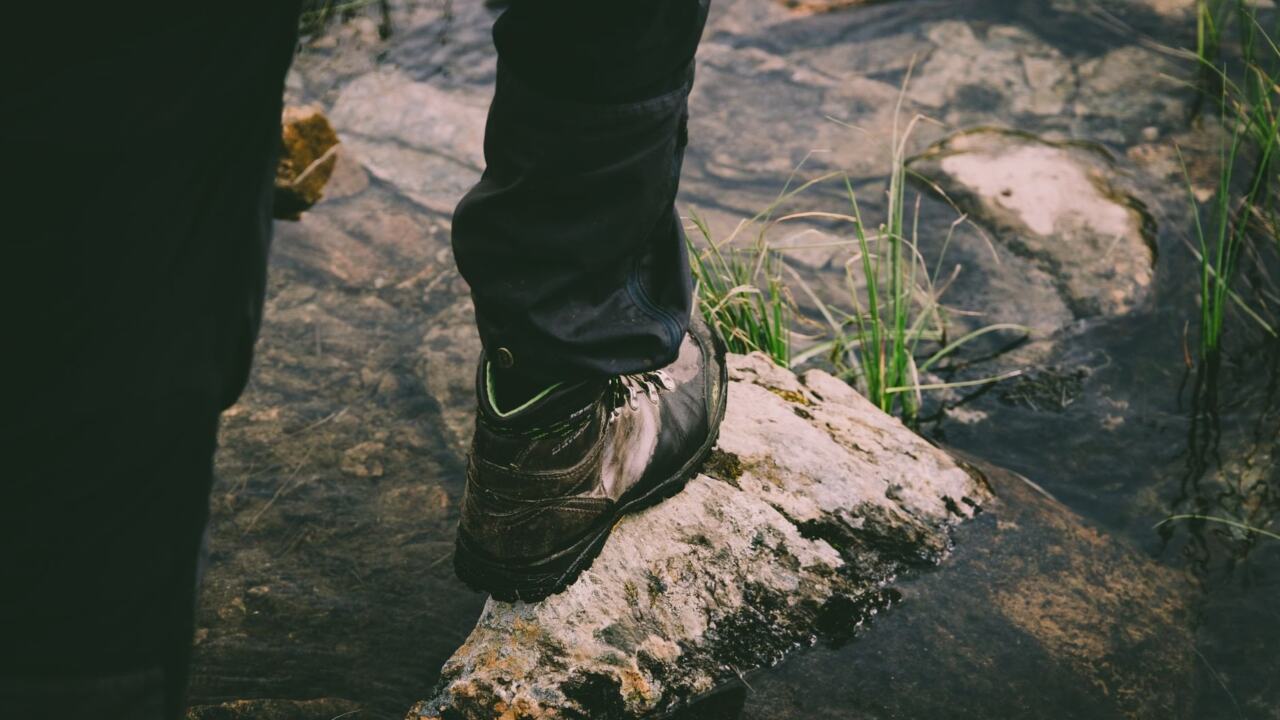
Bog is the condition that separates a Scottish boot from a generic one. A forum contributor warns that even the driest, rockiest trail can have ankle-deep bogs, so footwear that only copes with damp grass will struggle.
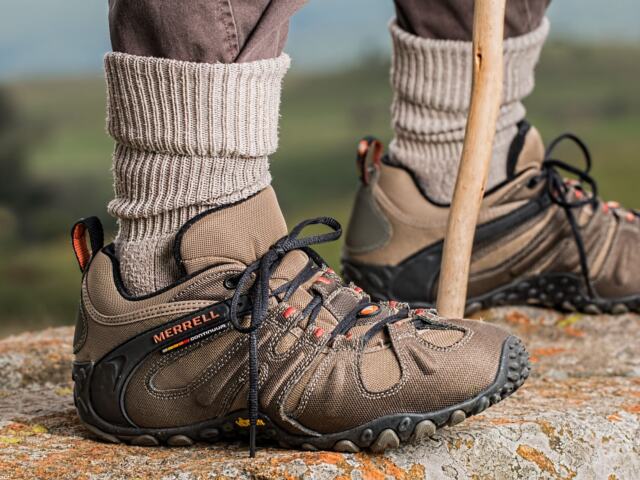
Deep-lugged soles for peat and mud
On soft ground the sole does the work. A seller describing a rubber rain boot (a different product from a walking boot) uses the phrase “deep aggressive bottom channels that bite into wet grass”, which is the kind of lug description worth looking for on a walking boot’s specification page. Shallow, closely spaced tread clogs with mud and gives little purchase on slick turf, so choose deep, open lugs for boggy routes.
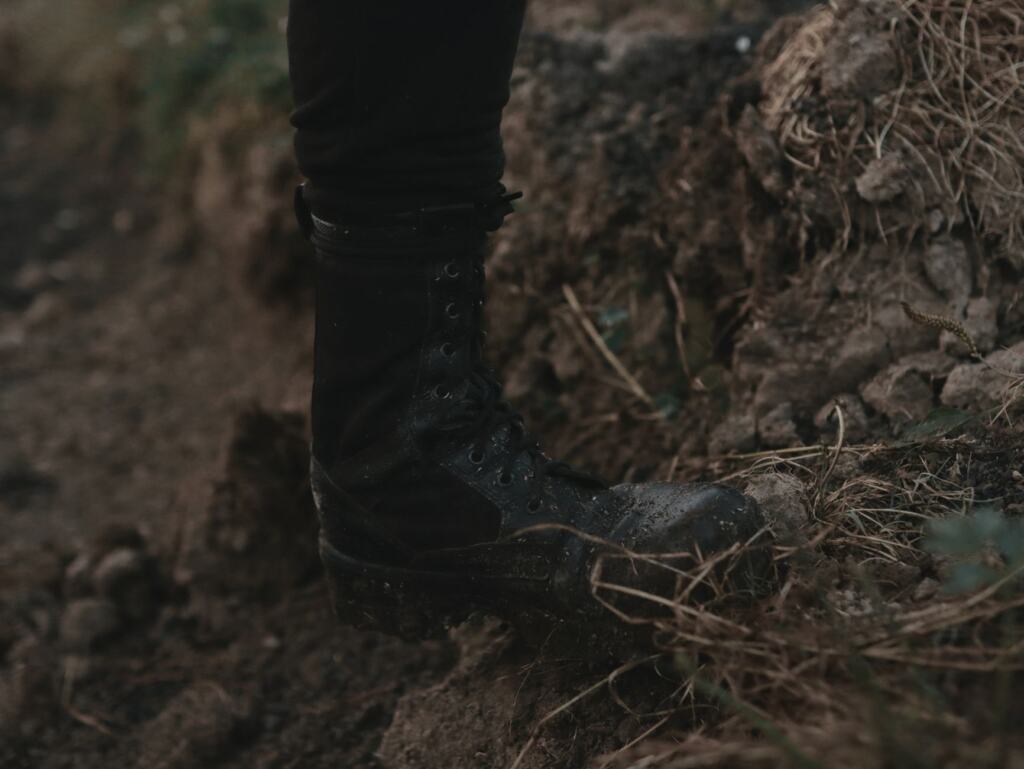
Boots with deep lugs suit walkers who head for hill paths, moorland and forest tracks that stay wet for weeks. They are less necessary if the walking is mostly on surfaced paths, where a lugged sole adds weight without much benefit.
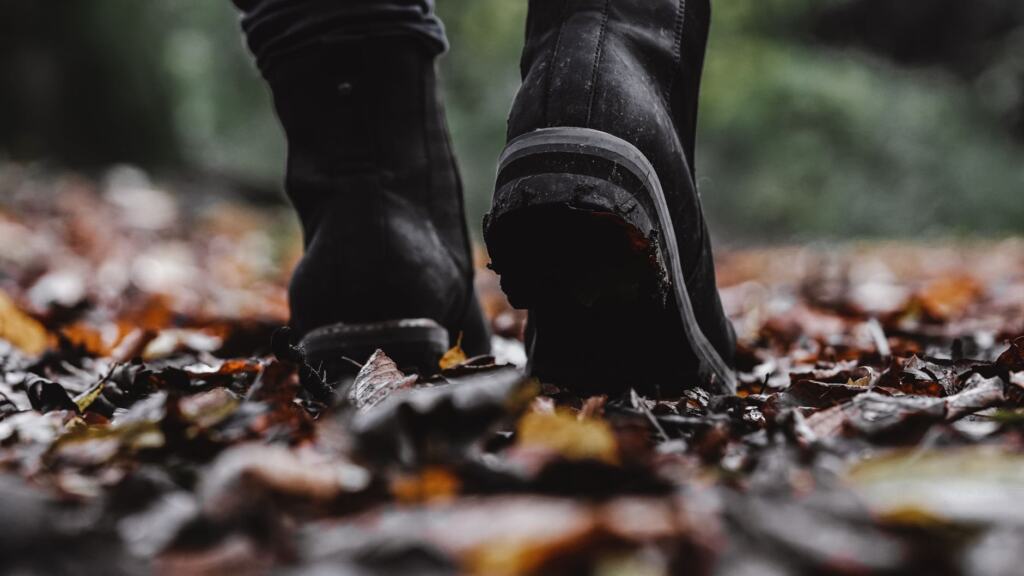
Cuff height and bog depth
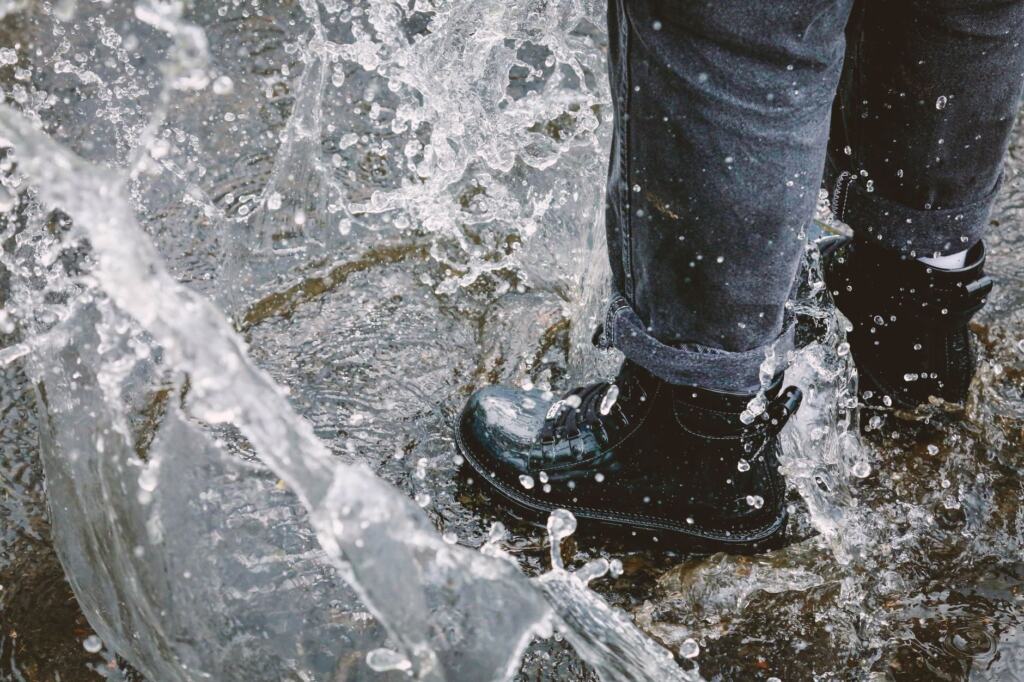
Because bogs can reach the ankle, a low-cut shoe or short boot lets water in over the top however waterproof the fabric is. For routes known to be boggy, a boot that rises above the ankle bone is the safer choice. Walkers who prefer a lighter boot should accept that wet feet are likely once the water level passes the cuff.
Munro days and rough, steep ground
Munro-grade terrain asks more of a boot than boggy paths do. Steep, rocky and off-path ground favours boots over shoes, and a forum writer who chose boots for hill and off-path walking did so for the additional ankle support.
Supportive, stiff-soled boots
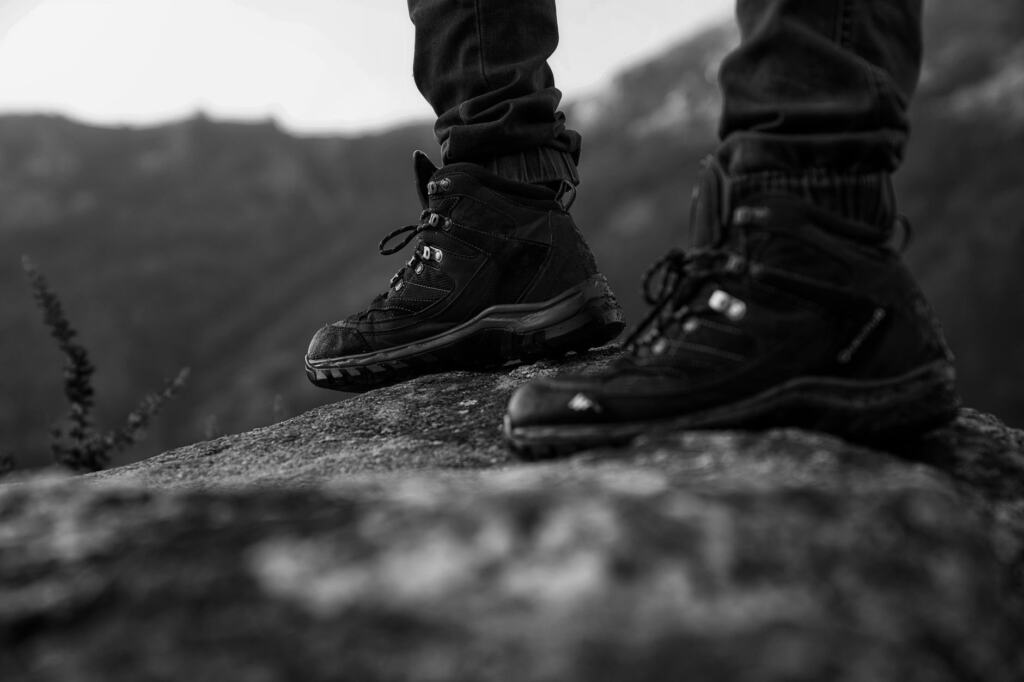
For Munros, pick a full boot with a firm sole unit and a supportive ankle. Check the maker’s specification page for the sole unit and any stated stiffness rating, because a stiffer sole resists flexing on rock and steep slopes. A boot that bends easily underfoot suits gentle paths better than scrambling or long, rough descents.
This type suits walkers who tackle hills regularly and walk off marked paths. It is heavier than a shoe, which is a fair trade on steep ground and a poor one on flat, surfaced routes. Long summit days also mean cold stops, so settle the best flask for walking hot drink all day alongside the boots.
Leather or synthetic for hill use
Either upper can work on a Munro. Full-grain leather is the more forgiving option for repeated soaking and re-treating, while synthetic boots are usually lighter and need spray treatments. The next section explains how each material takes waterproofing.
Waterproofing for Scottish weather
A boot is properly waterproof when its upper keeps water out, the interior can still breathe, and the finish is renewed as it wears. No upper stays sealed forever, so the realistic goal is a boot you can maintain.
Upper materials and what they accept
- Full-grain leather: accepts all waterproofing methods well, which makes it the most flexible choice for wet, muddy walking that needs regular re-treating.
- Synthetic: works best with spray treatments, so it suits walkers who want a quick, low-effort routine.
- Nubuck: needs specialised treatments that do not alter its texture, so use a product made for nubuck rather than a general wax.
A forum post about mid-height boots in rain and wind reports that the insides got wet and never really dried out. The lesson is to treat the upper, check the cuff height, and carry a spare pair of socks on long wet days rather than rely on any single boot feature.
How long waterproofing lasts
Waterproofing fades with use. One guide says that after 30-50 miles of hiking, water starts soaking in instead of beading up on the surface. For heavy use, such as weekly hiking, it suggests treating every 4-6 weeks or 40-60 miles. These are guide figures for treated boots rather than a maker’s warranty, so treat them as a prompt to inspect and re-proof rather than as a fixed expiry date.
Walkers who go out most weekends should expect to re-treat several times a season. Occasional walkers can re-treat less often, but should still check the finish before a long wet trip.
Boots or shoes in Scotland
Waterproof shoes are enough for many trips, and boots are the better choice once the ground is unpaved or steep. The decision depends on the route, not on the country.
When waterproof shoes are enough
A forum reply says waterproof shoes suffice for most trips. That fits towns, castle grounds, coastal promenades and well-surfaced paths, where the lighter weight and easier fit of a shoe count for more than ankle support. Shoes also make sense for travellers who want one pair for walking and sightseeing.
When to choose boots
The same reply suggests boots if you will be walking on any unpaved, ungraveled or unmaintained path or trail. That covers the typical Scottish hill walk, so boots are the safer default for anyone planning to leave the surfaced path. The ankle-deep bogs mentioned earlier make the case stronger on moorland and glen routes.
Carrying both is only worth the luggage if the itinerary really includes both kinds of ground.
Frequently asked questions
| Question | Answer |
|---|---|
| How can I tell if my boots have stopped being waterproof? | Well-treated boots show droplets that form and roll off rather than soaking in. If boots take 12+ hours to dry after getting wet, one guide treats that as a sign of compromised water resistance and a cue to re-proof. |
| Should I use wax or spray on leather boots? | Wax treatments give excellent water resistance and condition leather but reduce breathability slightly. Spray treatments maintain breathability better than wax but need more frequent reapplication. Pick wax for maximum protection on full-grain leather and spray for convenience. |
| Does a Vibram outsole make a boot suitable for Scotland? | A named sole unit such as a Vibram outsole is one detail on the specification page, not a guarantee. For wet ground, look for deep, open lugs that bite into wet grass and mud, and for Munros check any stiffness rating the maker states. |